


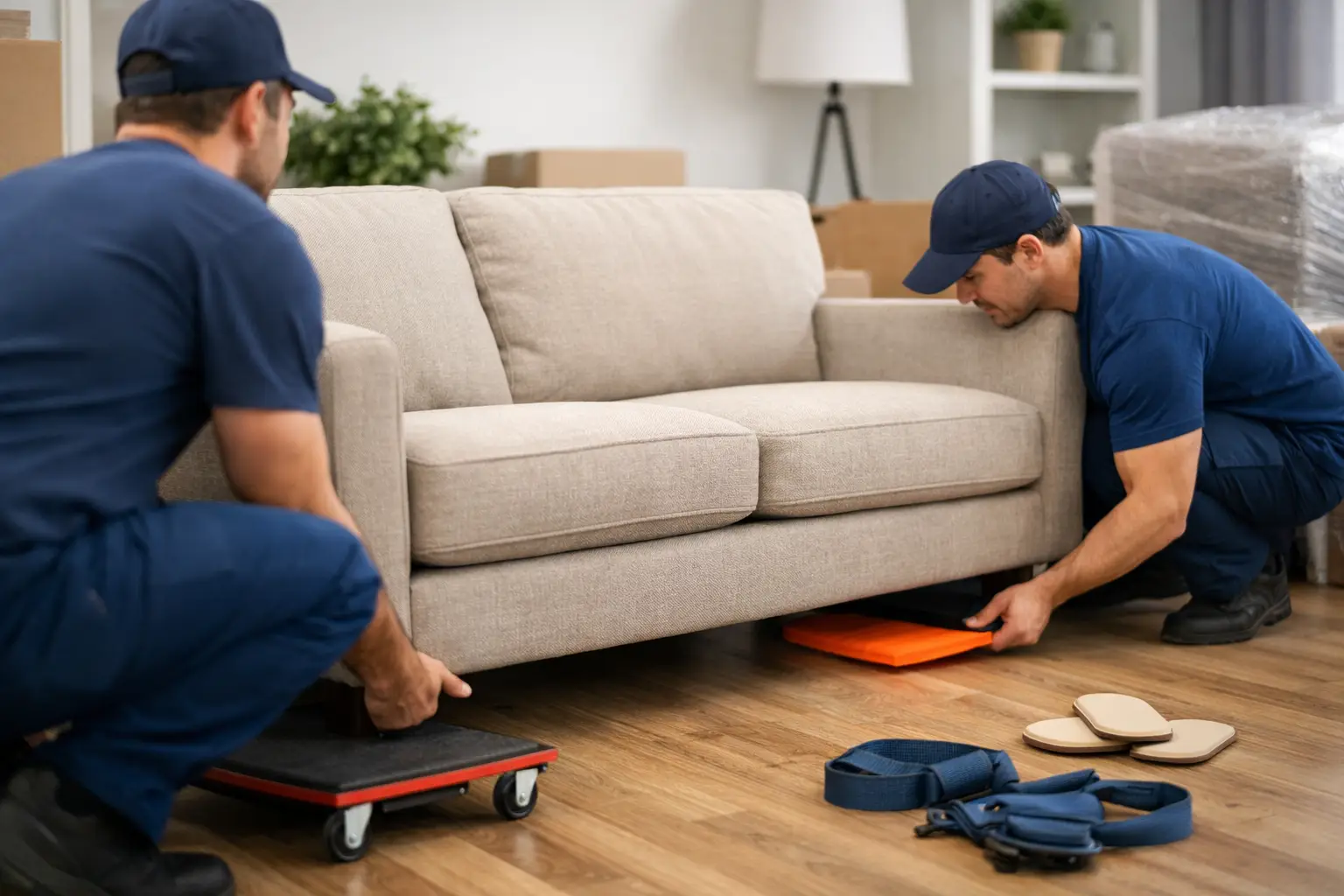
A sofa stuck in a doorway can turn a simple move into a two-hour problem. The best way to move furniture is not about brute strength. It is about planning the route, using the right equipment, protecting surfaces, and knowing when a job needs professional handling.
Furniture is usually the hardest part of any move because it is heavy, awkward, and easy to damage in tight spaces. A dining table may look manageable until you reach the stairs. A dresser may seem solid until a drawer slides open mid-carry. Good results come from reducing risk before anything is lifted.
The best way to move furniture starts before moving day
Most furniture damage happens before the truck is loaded. It starts with poor measurements, rushed packing, or trying to move pieces that should have been partially disassembled.
Start by identifying your largest and heaviest items. Measure the furniture, then measure doorways, hallways, stairwells, and elevator openings. Do not guess. A few minutes with a tape measure can prevent scraped walls, broken table legs, and wasted time.
Next, decide what actually needs to be moved as-is. Bed frames, dining tables, sectionals, desks, and shelving units often move more safely when taken apart. Remove legs, shelves, glass panels, and detachable cushions when possible. Keep all hardware in labeled bags and tape those bags to the underside of the item or store them in one marked box.
This is also the point to clear walking paths. Remove rugs that slide, wall art near corners, and anything else that creates a tripping hazard. If the weather is wet, protect entry floors so movers are not carrying weight over slick surfaces.
Use the right equipment, not just extra effort
If you want the best way to move furniture, equipment matters. Carrying a heavy item with bare hands is slower, less stable, and more likely to end with injury or damage.
A furniture dolly helps with large flat-bottom pieces like dressers and cabinets. An appliance dolly works better for tall, heavy items that need strap support. Moving straps can reduce strain when lifting bulky pieces, especially on short carries. Furniture sliders are useful on hardwood, tile, and low-pile carpet because they let you shift heavy items without dragging them directly across the floor.
Padding matters just as much as lifting tools. Use moving blankets to protect wood, upholstery, and corners. Secure blankets with stretch wrap or tape applied over the blanket, not directly on delicate surfaces. For glass inserts, mirrors, or stone tops, use reinforced protection and keep those pieces separate from general furniture loads.
There is a trade-off here. Buying or renting equipment adds cost, but it is usually far less expensive than repairing gouged flooring, broken furniture, or a back injury.
How to lift furniture without getting hurt
Poor lifting technique is one of the main reasons moves go off track. Even lighter furniture becomes dangerous when the weight is uneven or the grip is unstable.
Lift with your legs, keep the item close to your body, and avoid twisting while carrying. If you need to turn, move your feet instead of rotating your torso. Work slowly and communicate clearly with anyone helping you. Simple commands like stop, lower, tilt, and rotate are better than trying to correct things mid-move.
Team lifting works best when one person sets the pace and calls the movement. On stairs, the person on the lower end usually carries more weight, so that role should go to the stronger or more experienced mover. If the piece blocks visibility or forces an unsafe grip, stop and rethink the approach.
Sometimes the safest option is not lifting at all. A dolly, slider, or partial disassembly can do more than extra manpower.
Protect the furniture and the property at the same time
People often focus on protecting the furniture and forget about walls, floors, railings, and door frames. A careful move protects both.
Wrap wood and upholstered pieces before they leave the room. Remove drawers from dressers if the frame is too heavy, or secure them closed if removal weakens the piece. Tape doors shut on cabinets. Protect sharp corners with padding because those are usually the first points of contact in narrow hallways.
For the home or office, cover floors in high-traffic areas and use corner guards when space is tight. If you are moving through an apartment building or office corridor, confirm building rules in advance. Some properties require elevator reservations, floor protection, or certificate documentation from movers. Missing that detail can delay the entire schedule.
Loading order makes a big difference
A lot of moves become harder because the truck is loaded in the wrong order. The goal is stability, access, and weight distribution.
Heavy and large items generally go in first, including sofas, mattresses, dressers, and tables. These pieces should be placed against the walls of the truck to create a stable base. Lighter items and boxes can then be stacked around them. Fragile pieces should not be trapped beneath shifting furniture or loaded where they can absorb pressure during transit.
Use tie-downs to keep items from moving in the truck. This step gets overlooked in short local moves, but even a quick drive includes braking, turns, and road vibration. Unsecured furniture can rub, tip, or crush nearby items.
There is also a practical balance to strike. Packing the truck tightly improves efficiency, but overpacking can make unloading harder and increase the risk of damage when items are wedged together.
When professional movers are the best option
Some furniture is simply not a good candidate for a do-it-yourself move. Large sectionals, safes, commercial desks, conference tables, antique wood pieces, marble tops, and oversized bedroom sets often require more than basic tools and extra hands.
The same goes for difficult access. Tight staircases, multi-story homes, apartment buildings with service restrictions, and office moves with time windows all increase complexity. In those cases, the best way to move furniture may be hiring a professional crew that handles packing, lifting, loading, and transport as one controlled process.
A professional team brings more than labor. They bring equipment, handling methods, load planning, and experience with awkward pieces. That matters when one mistake can damage a high-value item or slow down a move that already has a deadline. For households and businesses that want less disruption, working with a company like STC Movers can turn a physically demanding job into a managed operation.
Common mistakes that cause delays and damage
Most furniture moving problems are predictable. People underestimate weight, skip measurements, rush disassembly, or fail to protect surfaces properly. Another common mistake is trying to move everything in one trip without sorting what should be donated, discarded, or replaced.
Timing also matters. If packing runs late, furniture prep usually gets rushed first. That is when hardware gets lost, blankets get skipped, and loading becomes disorganized. Building more time into the schedule is not wasted time. It is damage control.
Weather can complicate things too. Rain, heat, and ice all affect grip, floor protection, and transportation timing. A plan that works on a clear day may need adjustments when conditions change.
A practical approach that works
The best furniture moves are usually the least dramatic. Measure first, disassemble what makes sense, protect every surface, use proper equipment, and load with a clear plan. If a piece is unusually heavy, valuable, or difficult to maneuver, do not force it just to save an hour.
Furniture moving is one of those jobs where control matters more than speed. When each step is handled with the right preparation, the move stays on schedule, the property stays protected, and the furniture arrives in usable condition. That is the result most people actually want – not just getting it out the door, but getting it there without creating a second problem to fix.