


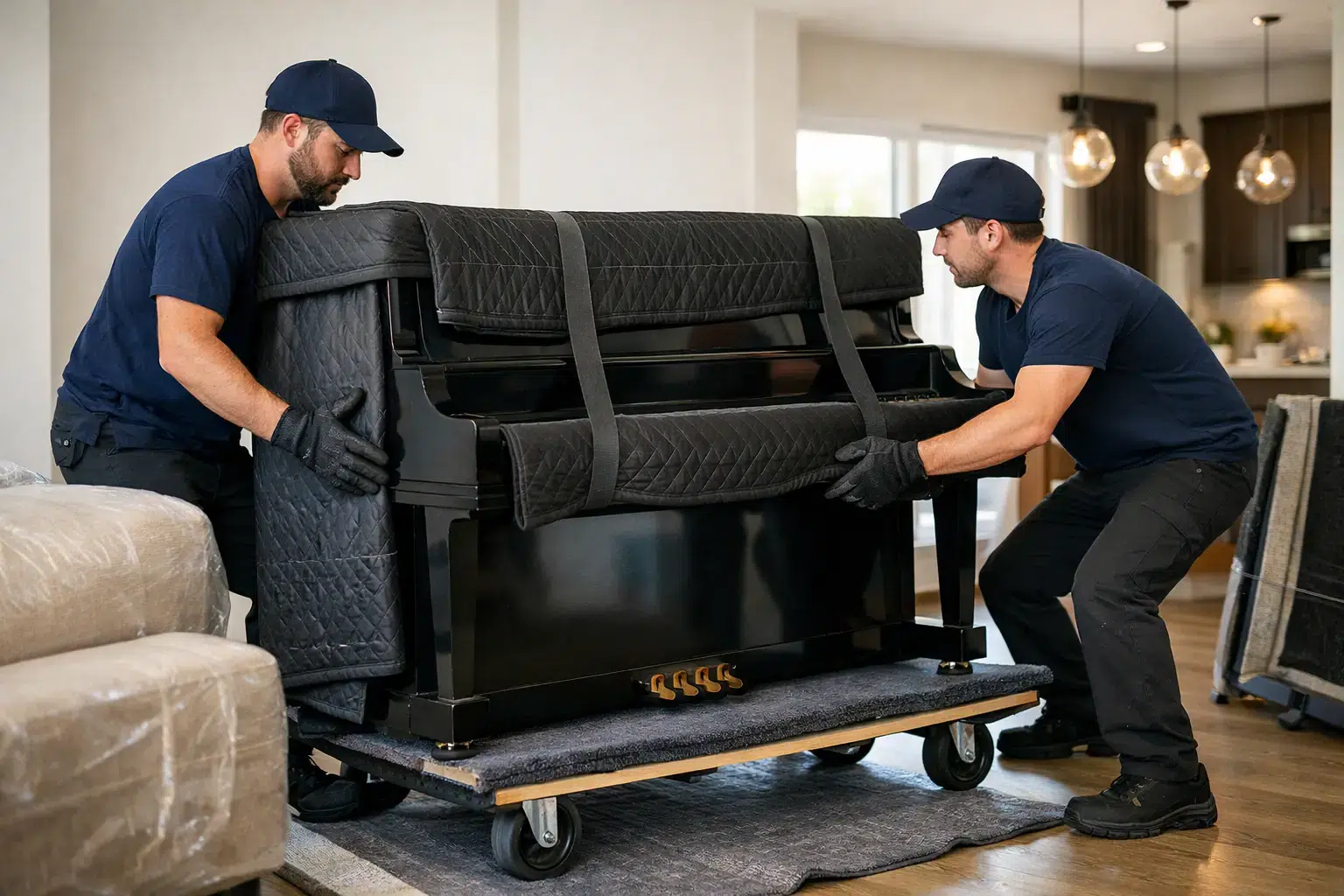
A piano can weigh anywhere from a few hundred pounds to well over 1,000 pounds, but its weight is not the only problem. Its center of gravity is awkward, its finish is vulnerable, and its internal components can be affected by impact, humidity, and improper handling. Knowing how to relocate a piano starts with treating it as a specialized moving job, not another piece of furniture.
The right approach depends on the piano type, the route through each property, and whether stairs, tight turns, elevators, or long carrying distances are involved. For many moves, professional piano handling is the safest and most cost-effective choice once the risk of injury or damage is considered.
Start by Identifying the Piano and the Route
Before anyone lifts a corner, determine exactly what is being moved. An upright piano may weigh 300 to 800 pounds, depending on its size and construction. A baby grand can weigh 500 to 650 pounds, while larger grand pianos often exceed 1,000 pounds. Older instruments may be heavier than expected because of dense wood frames and cast-iron plates.
Measure the piano’s height, width, depth, and approximate weight. Then measure every part of the route: door openings, hallways, stair landings, turns, elevators, gates, and the path from the home to the truck. Do not assume a piano that entered the home through one route can leave through the same one. Renovations, furniture placement, railings, and landscaping can change access.
Pay special attention to staircases. A straight, wide staircase may be manageable with the right crew and equipment. A narrow staircase with a turn at the landing can make an otherwise simple relocation much more complex. Exterior steps, uneven walkways, wet pavement, and steep driveways should also be part of the plan.
If access is uncertain, schedule an in-home assessment before moving day. A professional mover can determine whether the piano needs to be carried, placed on a skid board, moved with a stair-climbing system, or handled through a different entrance.
Prepare the Piano Before Moving Day
Remove everything from the piano, including sheet music, decorative items, and any loose accessories. Lock the keyboard lid if the piano has a lock. If it does not, secure the lid closed with padding and moving wrap. Never use tape directly on the wood finish, as it can leave residue or pull away finish when removed.
For grand and baby grand pianos, the lid, pedals, music rack, and legs may need to be removed and protected separately. This is not a casual disassembly project. The legs support a significant portion of the piano’s weight, and improper removal can cause the body to shift or fall. The piano should be secured to a proper skid board before it is moved.
Keep the instrument closed and protected from moisture. A piano’s soundboard, action, and keys are sensitive to major temperature and humidity changes. While a brief trip through outdoor conditions is usually unavoidable, leaving a piano in an unheated garage, a damp storage unit, or a truck overnight can create avoidable problems.
Use the Right Equipment, Not Improvised Tools
Piano moving requires equipment designed to control weight and prevent shifting. Household hand trucks, furniture sliders, and standard dollies are not a substitute for piano-specific equipment. They can slip, tip, or concentrate too much force on one part of the instrument.
A properly equipped crew may use:
- Heavy-duty moving blankets and stretch wrap to protect the cabinet and finish
- A piano skid board and load-rated straps for grand or baby grand pianos
- A heavy-duty piano dolly or four-wheel dolly for controlled movement
- A ramp, liftgate, or other appropriate truck-loading equipment
The truck matters as much as the carrying equipment. The piano needs to be secured against a solid wall with rated straps so it cannot roll, slide, or absorb impacts from other items. It should not be loaded beneath stacked furniture, packed loosely among boxes, or left unsecured for a short local trip.
How to Relocate a Piano With a Safe Lifting Plan
A safe move requires enough trained people to control the piano at every point. One person should direct the movement, call out transitions, and confirm when hands, feet, and paths are clear. Everyone involved should know the route before the lift starts.
Avoid lifting a piano by its legs, lid, keyboard area, or decorative trim. These components are not designed to carry the instrument’s full weight. The strongest areas are typically the lower structural frame and designated moving points, but the correct grip varies by piano style.
The team should lift with legs, keep the load close, and move in short, deliberate stages. Rushing causes most avoidable incidents. If a grip changes, a door catches, or the route becomes blocked, the crew should stop and reset rather than trying to correct the problem while the piano is in motion.
This is especially critical on stairs. A piano can shift its weight suddenly when angled, and the people on the lower end carry substantial force. If the move involves multiple flights of stairs, narrow landings, or a steep exterior approach, hiring experienced piano movers is generally the better decision.
Protect the Home as Well as the Instrument
A successful piano move should not leave behind damaged walls, scratched flooring, bent railings, or broken door frames. Protect the route before the piano starts moving. Floor runners, corner guards, doorway protection, and padded railings can prevent expensive repairs.
Hardwood floors deserve particular attention. A piano can create deep scratches or dents if a dolly wheel has debris trapped under it or if weight is concentrated in one spot. Tile and stone floors can be slippery, while carpet can make dollies harder to control. Each surface creates a different handling issue.
At the destination, clear the placement area in advance. A piano should not be set near a heating vent, fireplace, radiator, exterior door, or direct afternoon sunlight if those conditions can be avoided. The best location is usually an interior wall in a space with stable temperature and humidity.
Plan for Timing, Weather, and Storage
Weather can change the risk level quickly. Rain makes walkways slippery and can expose the piano to moisture. Extreme heat or cold can affect the instrument, particularly if it remains in a truck for an extended period. If severe weather is expected, a rescheduled move may be safer than forcing the job through poor conditions.
For long-distance moves, ask how the piano will be handled during transfer points and whether it will remain in climate-controlled conditions. A piano moving within the same city has different risks than one traveling across several states, changing trucks, or spending time in storage.
If storage is necessary, choose a clean, dry, climate-controlled facility. Standard storage can expose a piano to humidity swings that affect tuning, wood joints, felt, and internal mechanisms. Climate control costs more, but it is often reasonable protection for an instrument with significant financial or sentimental value.
Know When Professional Piano Movers Are Necessary
A small upright moving across a ground-floor room may seem manageable, but the risk increases quickly when the move includes stairs, difficult access, a large piano, or a valuable finish. Professional crews bring trained labor, protective materials, specialized equipment, and a process for loading and securing heavy items.
When comparing moving providers, ask direct questions. Confirm whether the company handles pianos regularly, what equipment it uses, whether it can assess the route in advance, and what valuation or insurance options apply. Also clarify whether piano moving is included in the estimate or treated as a separate specialty service.
STC Movers can help customers plan the physical and logistical details of a piano relocation as part of a larger household move. Early planning gives the moving team time to confirm access, staffing, equipment, and scheduling before moving day.
After the piano is placed, allow it time to adjust to the new environment before scheduling tuning. Most piano technicians recommend waiting at least a few weeks, since temperature and humidity changes can affect pitch. A careful move protects the instrument on the road; proper placement and follow-up care help protect it long after the truck has left.