


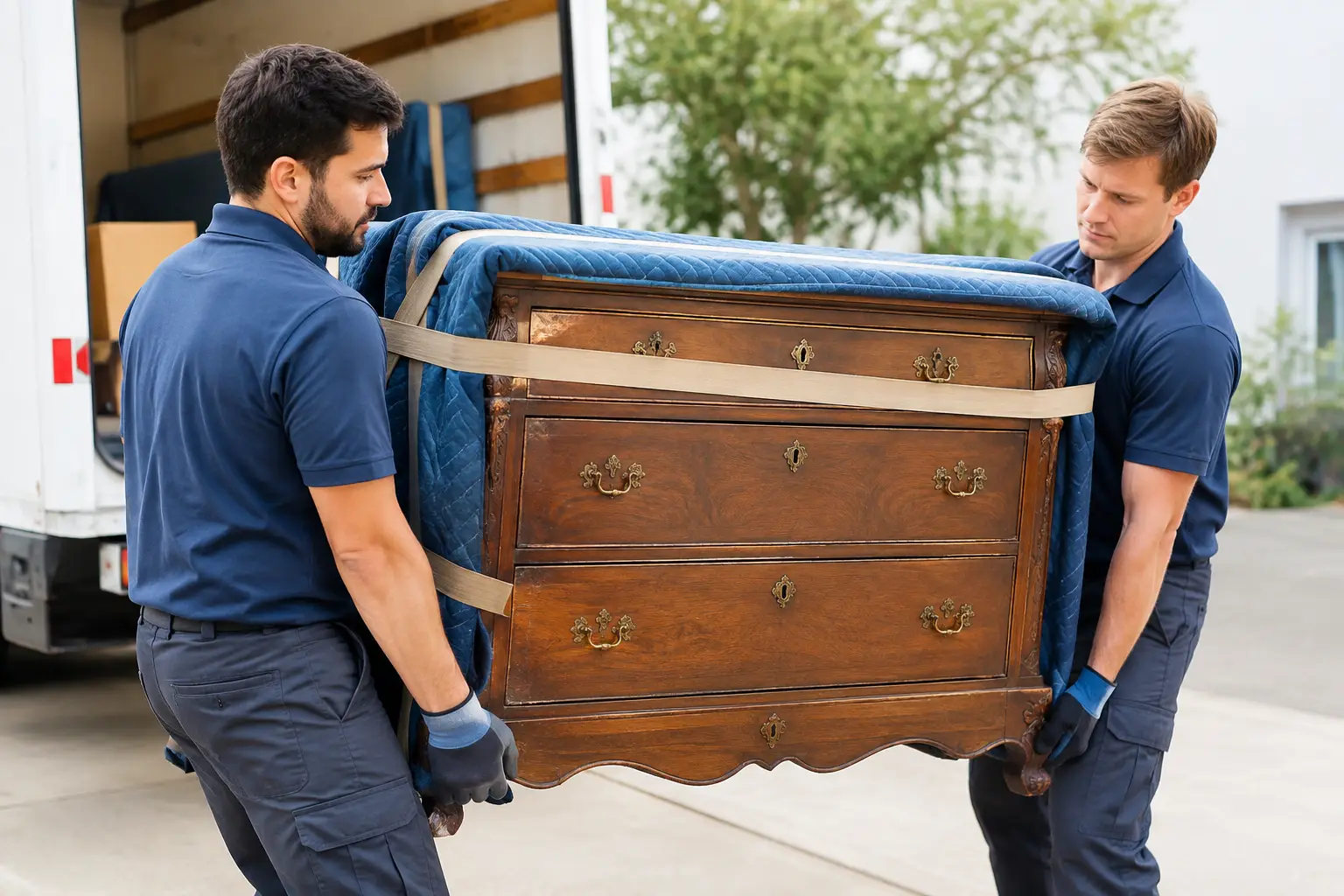
A carved wood dresser, marble-topped table, or hand-built cabinet can be far more vulnerable than it looks. Age, previous repairs, dry joinery, fragile veneers, and original finishes all change how to transport antique furniture safely. The goal is not simply to get the piece from one address to another. It is to prevent pressure, vibration, moisture, and handling mistakes from causing damage that may be difficult or impossible to reverse.
For a move involving valuable or sentimental antiques, careful preparation usually matters more than speed. A professional moving crew can provide the right equipment and labor, but owners should also understand what makes a particular piece sensitive before moving day begins.
Assess the Furniture Before You Move It
Start by identifying the materials and weak points. Antique furniture is not always constructed like modern furniture. A chair may have loose joints hidden beneath an intact finish. A chest may have a fragile back panel. A dining table can have a heavy stone top that places stress on an old wood base.
Take clear photos from all sides before packing. Photograph existing scratches, chips, cracks, loose trim, water marks, and hardware. This creates a useful condition record and helps movers understand where extra care is needed.
Check drawers, doors, and removable parts. Empty every drawer, even if the contents seem light. Weight inside a drawer can strain old runners and cause the drawer to shift during carrying. Remove keys, detachable mirrors, shelves, finials, and glass inserts when possible. Place small hardware in labeled bags and keep it with your moving documents rather than loose in a box.
Do not assume a piece should be disassembled just because it can be. Taking apart an antique can damage original screws, dowels, glue joints, or decorative elements. If a component was not designed for regular removal, consult a furniture restoration professional before forcing it apart.
Use the Right Materials to Protect Antique Furniture
Blankets alone are not enough for every piece. Moving blankets protect against surface impacts, but they can rub against delicate finishes if they are wrapped too tightly or used without a protective layer. Start with clean, soft material such as acid-free tissue paper or unprinted packing paper over finished surfaces. Then add padded moving blankets and secure them with stretch wrap or moving straps.
Never apply tape directly to wood, veneer, lacquer, painted surfaces, or upholstery. Adhesive can pull away finish, leave residue, or damage aged fabric. Stretch wrap should secure the blankets, not be tightly wound directly around the furniture. Wood needs protection from abrasion, not compression.
For high-risk pieces, use corner protectors and rigid cardboard or custom crating. Marble, glass, mirrors, and thin decorative panels need more than a blanket. A glass door panel, for example, should be removed if practical, wrapped separately, and clearly labeled as fragile.
Upholstered antiques need a different approach. Use a breathable furniture cover where possible. Plastic can trap moisture, especially during long-distance moves or storage, creating conditions that encourage mildew. If plastic is used for short-term weather protection, remove it as soon as the piece is indoors and dry.
Plan the Route Before Lifting
The most careful packing will not help if a large armoire is forced around a tight stairwell. Measure the furniture at its widest, tallest, and deepest points. Then measure doorways, hallways, elevator openings, stair landings, and turns at both locations.
Remove obstacles before the crew arrives. Clear rugs, wall décor, lamps, and boxes from the path. Protect floors and door frames if needed. A few minutes of route planning can prevent a sudden stop, awkward pivot, or scrape against a doorway.
Pay special attention to weight distribution. Antique furniture can be deceptively heavy, and weight is not always centered. A secretary desk may be front-heavy when drawers are removed. A tall china cabinet can become unstable if carried at the wrong angle. Pieces should be lifted from structurally strong areas, not by drawer pulls, chair arms, carved trim, or decorative feet.
This is one situation where enough trained hands make a real difference. Trying to save time by having one person guide a heavy antique while another bears most of the weight increases the chance of drops, back injuries, and damaged joinery.
How to Transport Antique Furniture in a Moving Truck
Truck loading is where many antique pieces sustain preventable damage. Furniture should be loaded upright when its design requires it, secured against movement, and separated from other items with moving blankets. Do not stack boxes, mattresses, or equipment against delicate legs, doors, or carved surfaces.
Place heavy, stable items low and near the front of the truck, then build a secure load around them. Antique furniture should not be used as a support structure for heavier household goods. A period sideboard may look solid, but its top can bow under concentrated weight and its feet can split if the load shifts during braking.
Use ratchet straps or professional tie-down systems to limit movement. The straps should secure the padded item without crushing it. Keep antique furniture away from areas where metal tools, appliances, or loose hardware could contact it. If a piece has delicate legs or an uneven base, consider a custom support board or a crate that distributes its weight more evenly.
For long-distance transportation, check the truck for water intrusion and avoid loading antiques directly against exterior walls when possible. Temperature swings, condensation, and road vibration can affect old wood, leather, and finishes. Climate-controlled transportation may be worth considering for especially valuable pieces, fine veneers, antiques with ivory or shell inlay, and furniture traveling through extreme heat or cold.
Watch for Weather and Storage Risks
Rain is an obvious concern, but humidity can be just as damaging. Wood expands and contracts with moisture changes. A quick move from an air-conditioned home into a hot, humid truck can affect drawers, veneer, and glued joints. The risk rises when furniture sits in a truck, garage, or storage unit for several days.
Have a weather plan before moving day. Use covered loading areas when available, keep protective materials ready, and move vulnerable items quickly from the home to the truck. If a piece gets wet, do not use direct heat to dry it. Blot moisture gently, allow air circulation, and contact a restoration specialist if the finish turns cloudy or veneer begins lifting.
Storage requires similar caution. Standard storage may be acceptable for sturdy, lower-value furniture on a short timeline, but antique wood furniture generally does better in a clean, dry, climate-controlled space. Keep it off concrete floors using pallets or furniture risers, and leave enough room around it for air circulation.
Know When Professional Handling Is the Better Choice
A self-move may be reasonable for a small, sturdy antique that can be carried safely, protected properly, and transported over a short distance. The calculation changes with fragile construction, narrow access, multiple flights of stairs, heavy stone or glass components, or a long-distance move.
Professional movers bring dollies, straps, padding, loading experience, and coordinated labor. For antiques, ask direct questions before booking: how will the item be wrapped, will it be disassembled, what equipment will be used, and how will it be secured in the truck? A dependable mover should be able to explain the handling plan in plain terms rather than offering vague assurances.
For exceptionally valuable furniture, an appraisal and specialized transportation may be appropriate. This can add cost, but it may be justified when the item has historic value, a rare finish, or insurance requirements beyond standard household moving coverage.
Antique furniture has already lasted decades, and sometimes centuries, because it was built and cared for with intention. Give it the same consideration during a move: document its condition, protect its weak points, plan the path, and do not rush the carry just to save a few minutes.