


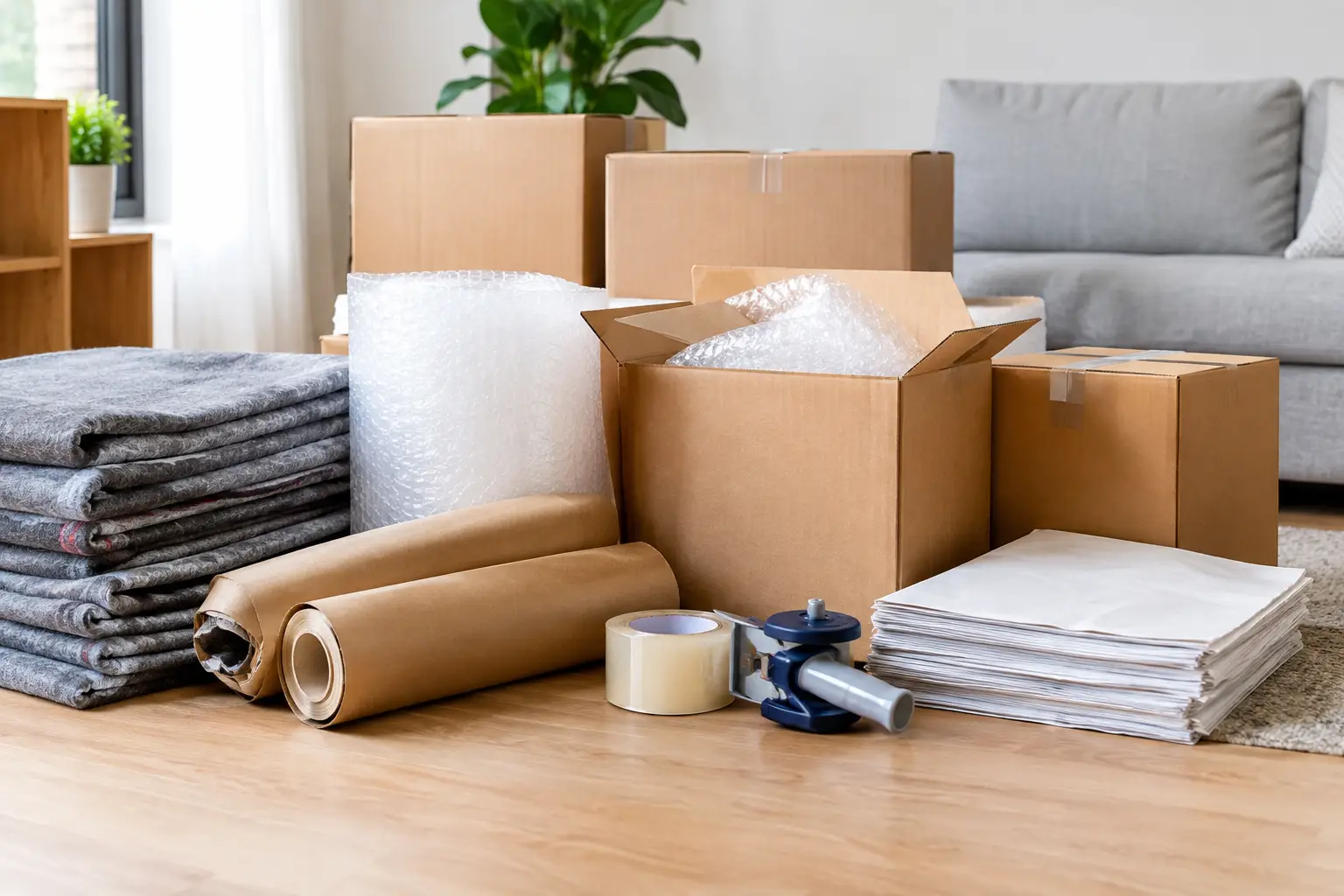
A move can go wrong before the truck arrives. A weak box can split under books, an unwrapped table can pick up deep scratches, and loose items in a carton can turn one broken glass into a box of cleanup. The best packing materials for relocation are the ones that match the item, the distance, and the way the load will be handled.
Buying more supplies than you need is wasteful, but cutting corners on protection usually costs more. The goal is not to wrap every possession in layers of plastic. It is to create stable boxes, protected surfaces, and clearly labeled loads that can be carried and stacked safely.
Start With Strong Moving Boxes
Cardboard moving boxes remain the foundation of most household and office moves. New, double-wall boxes offer the most consistent strength, especially for heavy, fragile, or valuable belongings. Used boxes can be a practical choice for lightweight items if they are dry, clean, and free of crushed corners or soft spots.
Use small boxes for dense items such as books, canned goods, records, tools, and small electronics. A box that is too large becomes difficult to lift safely long before it is full. Medium boxes work well for kitchenware, toys, files, and folded clothing. Large boxes are better for lighter, bulky possessions such as pillows, bedding, lampshades, and winter coats.
Specialty boxes are worth considering when the item calls for them. Wardrobe boxes let hanging clothes travel on a bar, which saves packing and unpacking time. Dish-pack boxes have heavier walls for plates and glassware. File boxes help offices move records in an orderly way. For televisions, mirrors, framed art, and large pictures, purpose-built cartons provide more protection than trying to force the item into an oversized standard box.
Avoid packing boxes until they are impossible to close or carry. A well-packed carton should have little empty space, but it should also close flat without bulging. Keep the weight manageable, generally no more than one person can lift with good control.
Protective Materials That Prevent Damage
The right cushioning material depends on what you are protecting. Packing paper is one of the most useful supplies because it fills empty spaces, wraps dishes, separates glassware, and protects surfaces without leaving ink behind. Plain, unprinted paper is the better choice for dishes, clothing, and light-colored upholstery.
Bubble wrap is best reserved for breakables and sensitive electronics. Wrap glassware, ceramic pieces, framed items, lamps, and small appliances individually. Put the bubbles toward the item, tape the wrap securely, and add a layer of crumpled paper inside the box so wrapped items cannot shift.
Furniture pads, moving blankets, and padded covers protect larger surfaces from scratches, dents, and rubbing during loading. They are especially useful for wood furniture, upholstered pieces, appliances, and metal bed frames. Pads are not a substitute for securing furniture in the truck, but they reduce damage where pieces touch each other or the vehicle walls.
Stretch wrap has a different job. It keeps drawers, cabinet doors, cushions, and loose furniture parts in place. It can also hold a moving pad around a dresser or table. Do not apply stretch wrap directly to wood furniture for an extended period, particularly in heat or humidity. Moisture can become trapped against the finish. Put a furniture pad or breathable layer between the wrap and the surface.
Foam sheets and foam corner protectors are useful for artwork, glass tabletops, mirrors, and furniture with sharp edges. They take up more room than paper, so they are not necessary for every item. Use them where impact protection matters most.
The Best Packing Materials for Relocation by Item
Kitchen packing deserves extra attention because it combines fragile items with dense weight. Wrap plates individually in packing paper, place them on edge in a sturdy dish-pack box, and cushion the bottom and top. Nest pots and pans with paper between them. Pack knives in a bundle with the blades covered, then mark the box clearly so nobody reaches in carelessly.
For glassware, fill the interior with crumpled paper before wrapping the outside. Pack glasses upright, use dividers when available, and do not place heavy items on top. Small appliances should travel in boxes with padding on all sides. If you still have the original box and internal inserts, use them for electronics and specialty appliances.
Books need small, sturdy boxes. Lay hardcovers flat or stand them upright with the spines against the side of the carton. Fill the remaining space with paper so they do not slide. Do not use large boxes for books simply because they fit. Weight, not volume, is the issue.
For clothing, suitcases and clean plastic bins can be useful for shoes, folded garments, and accessories. Wardrobe boxes are more efficient for hanging clothes, but they take up more truck space than standard cartons. If the move is short and you are packing yourself, leaving lightweight clothes in dresser drawers may be reasonable. Remove anything fragile, valuable, or loose first.
Electronics require anti-static protection when possible, especially for computers and components. Take photos of cable connections before disconnecting equipment, bag cords and remotes, and label them by device. Avoid using loose-fill peanuts for electronics or household goods. They shift easily, create mess, and make unpacking slower.
Tape, Labels, and the Supplies That Keep a Move Controlled
Packing tape is not an area to economize. Use quality shipping or moving tape that is at least two inches wide. Seal the bottom of every box with the center seam and both edge seams taped in an H pattern. Heavy boxes may need an additional strip across the bottom.
Masking tape and painter’s tape are helpful for labels and light tasks, but they should not be used to close moving boxes. They do not have the holding strength needed for a loaded carton. Duct tape also has limited value for box sealing because it can peel away from dusty cardboard and leave residue on furniture.
Every box should be labeled on at least two sides, not just the top. Include the destination room, a general description of contents, and handling instructions when needed. A label such as “Kitchen – glassware – fragile” is far more useful than “Kitchen.” Numbering boxes and keeping a basic inventory is smart for larger homes, commercial moves, or any move involving storage.
Keep a separate essentials box or bag for items you will need immediately: medications, chargers, keys, documents, basic tools, toilet paper, snacks, and a change of clothes. This is less about packing material and more about preventing a frustrating first night surrounded by unopened cartons.
When Plastic Bins, Bags, and Recycled Materials Make Sense
Reusable plastic bins are durable, stack neatly, and protect belongings from light moisture. They are a good option for garage supplies, toys, seasonal items, cleaning products, and office materials. Their trade-off is cost and weight. Empty bins are bulkier than flattened cardboard, and their rigid shape does not work well for every item.
Heavy-duty contractor bags are useful for soft goods such as bedding, pillows, stuffed toys, and clothing. Clear bags can help identify contents quickly. They should not be used for sharp objects, heavy books, breakables, or anything that could be damaged when bags are stacked or dragged.
Recycled materials can reduce costs, but use them carefully. Clean towels, linens, socks, and T-shirts provide good cushioning for non-fragile items and can wrap small household goods. Newspaper is acceptable for filling voids, but the ink can transfer to porous or light-colored surfaces. Grocery boxes, liquor boxes, and produce cartons may be strong, but only if they are clean, dry, and structurally sound.
Pack for the Move You Actually Have
A local move with direct loading and unloading does not require the same level of protection as a long-distance relocation or a move involving storage. Longer moves, multiple transfers, and climate changes increase the need for double-wall boxes, moisture-conscious wrapping, and secure labeling. Valuable artwork, antiques, large televisions, glass tabletops, and specialty equipment may require custom crating or professional packing.
Businesses should also plan for continuity. Use file boxes for documents, anti-static materials for sensitive equipment, and labels that identify departments or workstation numbers. Packing an office by room alone can create delays when employees need to reconnect equipment and resume work.
Professional movers can supply materials and pack items that need more controlled handling. STC Movers approaches packing as part of the overall move plan: the materials, box weight, labeling, loading order, and destination setup should support each other.
Before packing the first box, walk through each room and separate what will move from what will be donated, discarded, or handled personally. Then buy or arrange supplies based on the actual inventory. The right materials are not the most expensive ones. They are the ones that let every item arrive protected, identifiable, and ready to be put where it belongs.