


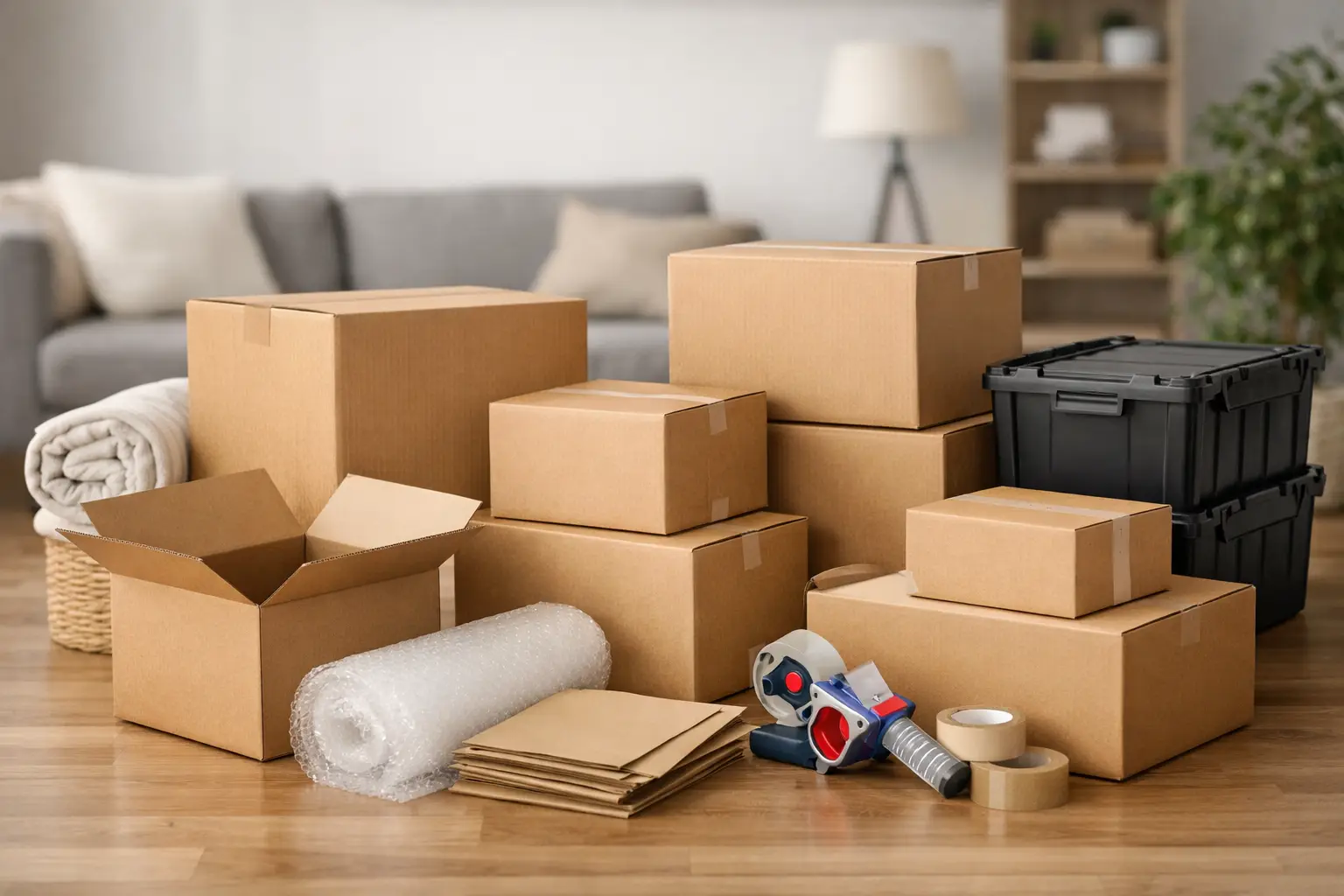
A box that is too large, weak, or poorly packed can turn an orderly move into broken dishes, crushed lampshades, and a truck that takes longer to load. The best boxes for moving house are not simply the cheapest ones you can find. They are boxes sized for the item, strong enough for stacking, and consistent enough to make loading and unloading more controlled.
For most households, a planned mix of new moving boxes, specialty cartons, and a limited number of clean used boxes works better than buying one size for everything. The goal is simple: keep each box liftable, protect what is inside, and create stable stacks that movers can handle safely.
What Makes a Good Moving Box?
A good moving box has firm, dry cardboard; intact seams; and flaps that close evenly without splitting. Boxes designed for moving are usually made from stronger corrugated cardboard than standard retail boxes. Many are double-walled, meaning they have an extra layer of corrugation for better resistance to crushing and punctures.
Strength matters most for boxes that will carry dense items or sit near the bottom of a stack. Books, kitchenware, records, tools, and paper files can become surprisingly heavy. A thin grocery-store box may hold those items while it is sitting on the floor, then fail when it is lifted or stacked in a truck.
Uniform sizing also has real value. When several boxes share the same dimensions, they stack squarely and use truck space efficiently. Random boxes from deliveries can still be useful for light, awkward, or low-value belongings, but they tend to create uneven loads. That can slow down loading and increase the chance of damage in transit.
The Best Boxes for Moving House by Size
Most homes do not need a wide range of box sizes. A practical setup usually includes small, medium, large, and extra-large cartons, plus a few specialty boxes for fragile or hanging items. Choosing the right size is less about filling every available inch and more about controlling weight.
Small boxes for heavy items
Small boxes are the workhorses for dense belongings. Use them for books, canned goods, hand tools, records, framed photos, small appliances, and heavy pantry items. They should be filled nearly to the top so they keep their shape, but they should still be comfortable for one adult to lift.
A common packing mistake is putting all books in a medium or large box. It may look efficient, but it creates a load that is hard to carry safely and can damage the bottom of the carton. Keep heavy items in small boxes, and use crumpled paper or towels to fill gaps rather than adding more weight.
Medium boxes for everyday household goods
Medium boxes are often the most useful size for a house move. They work well for kitchen items, toys, shoes, folded clothing, small electronics, bathroom supplies, and decor. They provide enough capacity to reduce the number of cartons without becoming unmanageable when packed correctly.
For dishware and glassware, line the bottom with packing paper, wrap each piece individually, and place heavier pieces on the bottom. Fill empty spaces so items cannot shift. The box should feel firm when gently moved, not loose or rattling.
Large boxes for light, bulky belongings
Large boxes are best for lightweight items that take up volume: pillows, comforters, towels, linens, winter coats, stuffed animals, and lampshades. They are not the right choice for books, dishes, or a mixed collection of heavy household items.
Because these boxes can become bulky, avoid overfilling them. A box packed with bedding may be light but still awkward if the flaps are forced open or the sides bow outward. Keep the carton square, tape it securely, and do not stack heavy boxes on top.
Extra-large boxes for soft goods only
Extra-large boxes have a narrow role. Use them for bulky soft goods, not for “everything left in the closet.” They can be helpful when packing comforters, oversized pillows, or lightweight seasonal items, but they are easy to overload.
If you are unsure whether to use a large or extra-large carton, choose the smaller option. More manageable boxes generally make for safer lifting and more stable loading.
Specialty Boxes Worth Buying
Specialty boxes cost more than standard cartons, so they are not necessary for every item. They are worthwhile when they reduce the risk of damage or make packing significantly faster.
Wardrobe boxes are useful for hanging clothes, especially suits, dresses, coats, and items that wrinkle easily. They include a metal bar that lets clothing stay on hangers. For a short local move, some people prefer to leave clothes on hangers and cover them with large bags. That can work for a small amount of clothing, but wardrobe boxes offer better protection and keep garments contained.
Dish pack boxes are heavy-duty cartons designed for fragile kitchenware. They are a smart choice for fine china, glassware, serving pieces, and other breakables that would be costly or difficult to replace. The stronger cardboard helps, but the packing method still matters. Wrapped items, firm layers, and filled gaps are what prevent movement.
Picture boxes are adjustable cartons for framed art, mirrors, and flat-screen TVs when the original packaging is unavailable. They should be paired with corner protectors and padding. For particularly valuable artwork, antiques, or large mirrors, professional packing is often the safer decision.
File boxes can help home offices and businesses keep documents organized through a move. Their built-in handles are convenient, but do not treat them as a reason to overpack. Paper is heavy, and a file box should remain within a comfortable lifting weight.
New Boxes vs. Used Boxes
New boxes offer predictable strength, clean surfaces, and matching sizes. They are the better choice for fragile belongings, long-distance moves, storage, and any box that will carry substantial weight. New cartons also tend to close and stack more reliably, which matters when a moving truck is loaded tightly.
Used boxes can reduce cost and are fine for lightweight, non-fragile items if they are dry, clean, odor-free, and structurally sound. Inspect every used carton before packing. Reject boxes with soft corners, torn handles, crushed sides, water stains, insect activity, or old tape that has weakened the cardboard.
Avoid using boxes that previously held produce, chemicals, or items with strong odors. A free box is not a bargain if it transfers moisture, smells, or residue to clothing and household goods.
How Many Moving Boxes Do You Need?
The number depends on the size of the home, how long you have lived there, and how much you have already decluttered. A sparsely furnished apartment may need far fewer cartons than a family home with a garage, basement, and years of stored belongings.
Instead of guessing room by room, start with the categories that consume the most boxes: books, kitchenware, closets, linens, decor, storage areas, and children’s items. Kitchens and storage spaces are routinely underestimated because they contain many small items that need individual wrapping or sorting.
It is sensible to buy a modest buffer rather than running out while packing the final rooms. Unused clean boxes can often be kept for storage, recycled, or passed along. The bigger cost is usually the delay and stress of trying to pack a home with too few proper cartons.
Packing Rules That Protect the Boxes and Their Contents
Even the strongest carton will fail if it is packed without support. Tape the bottom seam with multiple strips of quality packing tape, especially for heavy boxes. Do not rely on the factory fold alone. Place heavier items at the bottom, lighter items on top, and use packing paper, towels, or other appropriate cushioning to stop movement.
Keep box weights consistent where possible. A box should be full enough that the top does not cave in when another carton is placed above it, but not so heavy that it requires two people to lift. If a box feels questionable before the move, repack it. That is faster than dealing with a split box on the stairs or driveway.
Label each box on at least two sides with the destination room and a clear description of its contents. Mark fragile boxes where they can be seen, but do not assume a “fragile” label replaces proper packing. For boxes that must remain upright, write “This Side Up” on multiple sides and pack them so that instruction is realistic.
Choose for Control, Not Just Cost
The right moving boxes make the rest of the move easier to manage. Small cartons control weight. Medium cartons handle most household goods. Large cartons protect soft, bulky items without wasting space, while specialty boxes reduce risk for belongings that need more than basic cardboard.
Before packing the first room, set aside the weakest used boxes and reserve strong, properly sized cartons for the items you would least want to replace. A well-packed box is one less problem waiting for you at the new home.