


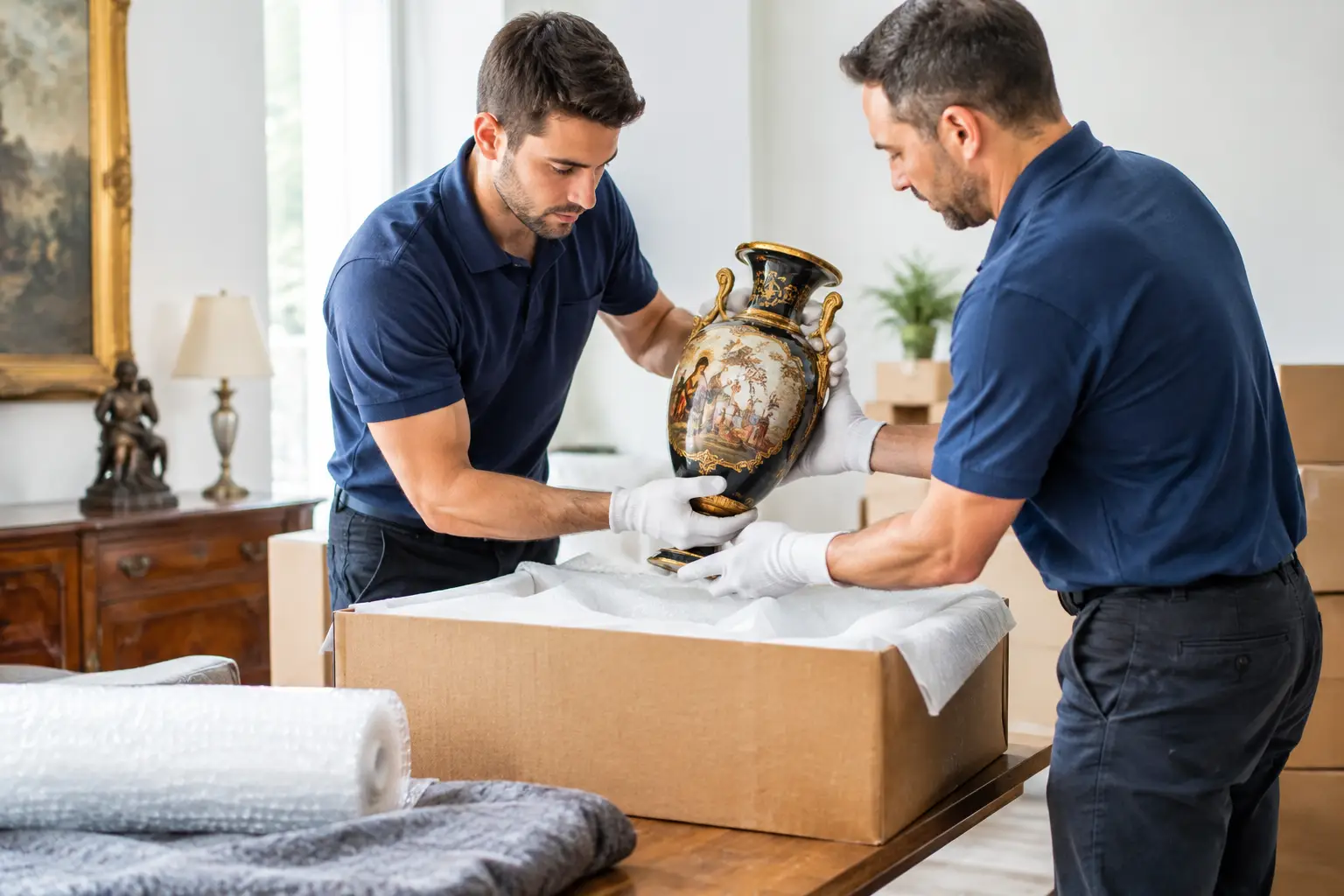
A chipped porcelain handle, a loosened veneer panel, or a cracked glass shade can change the value and meaning of an antique in seconds. The best movers for fragile antiques do more than carry furniture carefully. They plan for the specific materials, weak points, weight distribution, and packing requirements of each piece before moving day begins.
Antiques are not a standard moving category. A 19th-century dresser, a hand-painted mirror, a grandfather clock, and a glass-front curio cabinet can all require different handling methods. Selecting a mover should come down to evidence of process, not a general promise to be careful.
1. Ask How They Assess Each Antique Before Packing
A reliable moving company should want to know what it is moving before it provides a final plan. Share photos, dimensions, approximate age, known damage, and any prior repairs. For larger or unusually delicate items, ask whether a representative can inspect the pieces in person or by detailed video call.
The assessment should identify practical risks. Marble tops can separate from their bases. Older chairs may have dry joints that cannot safely bear lifting pressure. Mirrors may have fragile backing, while carved wood can catch on moving blankets or doorway trim. A mover who asks specific questions is more likely to build a workable handling plan.
Be clear about pieces with special needs, including antiques with loose hardware, removable shelves, original glass, wax finishes, or unstable legs. Do not assume a crew will recognize every issue on sight, especially if the item has a repair history that is not visible.
2. Verify the Packing Method, Not Just the Materials
Bubble wrap and moving blankets are useful, but they are not a complete antique-packing strategy. The right protection depends on the object. Glass, stone, finished wood, upholstery, metal, and painted surfaces react differently to pressure, moisture, tape, and movement inside a truck.
Ask the mover to explain how they will protect the item from surface damage and structural stress. For example, a glass-front cabinet may need its shelves removed, doors secured, corners protected, and the full piece padded before transport. A marble-topped table may require the top to be separated and crated or carried vertically only when its construction allows it.
Avoid companies that give vague answers such as, “We wrap everything.” Wrapping is only one part of the job. Proper packing also includes selecting clean materials, securing movable parts, using the correct lifting points, and preventing the piece from shifting during loading.
Watch for tape and blanket contact
Tape should not be applied directly to finished wood, lacquer, painted surfaces, old labels, or delicate veneers. Ask whether the crew uses a protective layer between the antique and any securing materials. Blankets should also be clean and dry. Dirt, hardware, or moisture trapped against an old finish can create damage that is not obvious until after delivery.
3. Confirm the Crew Has Relevant Handling Experience
The best movers for fragile antiques have crews that understand that strength alone is not the qualification. Antiques often need slower, coordinated handling through narrow halls, stairways, elevators, and tight loading areas. The crew should know how to use equipment without putting pressure on vulnerable sections.
Ask direct questions: Have they moved similar furniture? How do they handle oversized mirrors or glass cabinets? Will the same crew pack, load, and unload the shipment? A company does not need to claim museum-level specialty service to be capable, but it should be honest about the scope of its experience.
There is a trade-off here. A mover that regularly handles household goods may be a good fit for antique furniture, china, and decorative items as part of a residential move. Highly valuable collections, exceptionally rare pieces, or objects needing climate control may call for a dedicated fine-art or specialty logistics provider. The right choice depends on the item’s value, condition, and transportation requirements.
4. Get the Inventory and Condition Record in Writing
Before packing begins, photograph every antique from several angles. Capture close-ups of existing scratches, cracks, chips, stains, loose trim, and repairs. Keep these images with a written inventory that identifies each item and its condition.
A professional mover should also maintain an inventory system for the shipment. This helps establish what was picked up and delivered, and it reduces confusion when boxes, furniture components, and removable parts are separated during the move. If a cabinet has detachable shelves, keys, or a marble top, make sure those components are labeled and tracked together.
Do not treat documentation as a sign that you expect trouble. It is basic move control. Good records protect both the customer and the moving company by establishing the condition of each item before transport.
5. Understand Valuation Coverage Before You Book
Many customers use the words “insurance” and “valuation” interchangeably, but moving coverage can be more limited than expected. Ask what level of valuation coverage is included, what additional options are available, whether antiques have exclusions, and how a claim would be handled if damage occurs.
Read the paperwork before moving day. A low default level of liability may not reflect the actual replacement cost or market value of an antique. On the other hand, declared-value coverage may not account for sentimental value, provenance, or the difficulty of finding a comparable item.
For high-value antiques, consider speaking with your homeowners or renters insurance provider as well. Some policies have limits for collectibles, antiques, art, jewelry, or items moved by a third party. The goal is to understand the protection in place before the item is on a truck, not after a problem occurs.
6. Review the Route and the Loading Plan
Damage does not happen only during lifting. It can happen when a large antique is maneuvered through a cramped doorway, placed too close to heavier freight, or allowed to move during transport. Ask the mover how the truck will be loaded and how fragile pieces will be secured.
Antiques should not be treated as filler around heavy appliances, metal office furniture, or dense cartons. The crew should account for weight, access, and delivery order. In some cases, loading an antique last may make sense because it will be unloaded first. In other cases, it may need a more protected position deeper in the truck. There is no one correct arrangement, but there should be a reasoned plan.
Provide accurate information about stairs, parking restrictions, elevators, long carries, and access at both locations. A surprise obstacle can lead to rushed decisions. If a piece may not fit through a doorway, measure before the move and discuss alternatives in advance.
7. Compare Estimates for Scope, Not Only Price
The lowest estimate may leave out services that matter most for antiques, such as custom packing, crating, disassembly, reassembly, extra labor, stair carries, shuttle service, or valuation coverage. Compare what each company is actually proposing rather than comparing one total against another.
A useful estimate should identify the expected services, labor assumptions, packing materials, schedule, and potential additional charges. If a mover cannot explain the estimate clearly, that is a concern. Fragile antique moves require coordination, and the paperwork should reflect that level of care.
Ask what happens if the crew finds an issue on moving day, such as a loose leg, a piece that will not clear the doorway, or an item that needs more protection than expected. A dependable company will explain the options and obtain approval before adding work or charges.
Preparing Your Antiques for Moving Day
You can reduce risk by removing loose contents from cabinets, taking out drawers when appropriate, and setting aside keys, hardware, and small detachable pieces in clearly labeled containers. Do not attempt to disassemble an antique unless you know it was designed to come apart. Forced disassembly can cause more damage than careful transport.
Keep purchase records, appraisals, restoration documents, and condition photos with you rather than in the moving truck. If an item has a special handling instruction, write it down and point it out to the crew lead before loading begins.
For a move involving fragile antiques, the goal is not simply to get every item from one address to another. It is to make each handling decision deliberate. A mover that communicates clearly, documents the work, and respects the limits of older materials gives you a far better basis for trusting the process.