


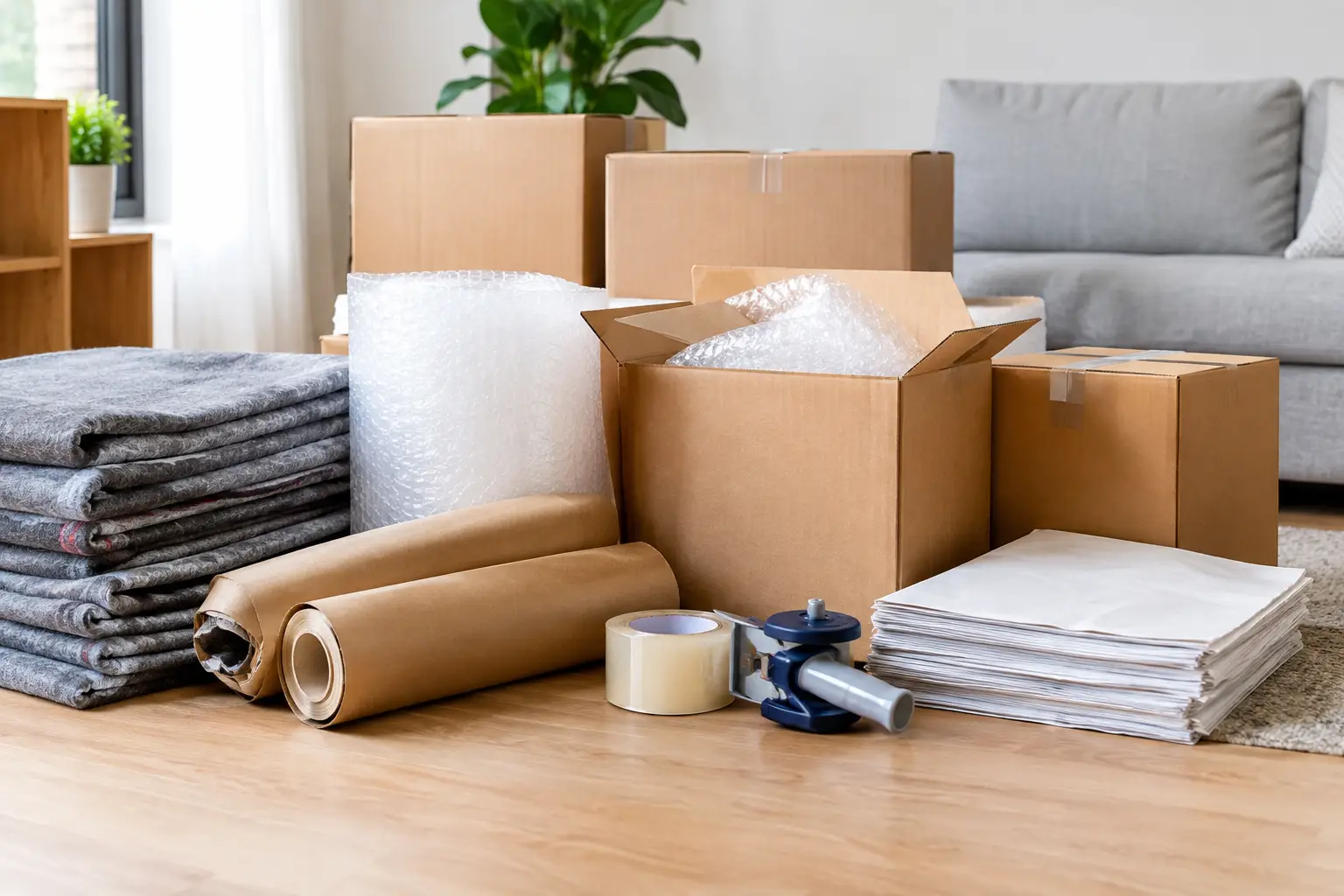
A move can go wrong before the truck arrives. A weak box can split under books, an unwrapped table can pick up deep scratches, and loose items in a carton can turn one broken glass into a box of cleanup. The best packing materials for relocation are the ones that match the item, the distance, and the way the load will be handled.
Buying more supplies than you need is wasteful, but cutting corners on protection usually costs more. The goal is not to wrap every possession in layers of plastic. It is to create stable boxes, protected surfaces, and clearly labeled loads that can be carried and stacked safely.
Start With Strong Moving Boxes
Cardboard moving boxes remain the foundation of most household and office moves. New, double-wall boxes offer the most consistent strength, especially for heavy, fragile, or valuable belongings. Used boxes can be a practical choice for lightweight items if they are dry, clean, and free of crushed corners or soft spots.
Use small boxes for dense items such as books, canned goods, records, tools, and small electronics. A box that is too large becomes difficult to lift safely long before it is full. Medium boxes work well for kitchenware, toys, files, and folded clothing. Large boxes are better for lighter, bulky possessions such as pillows, bedding, lampshades, and winter coats.
Specialty boxes are worth considering when the item calls for them. Wardrobe boxes let hanging clothes travel on a bar, which saves packing and unpacking time. Dish-pack boxes have heavier walls for plates and glassware. File boxes help offices move records in an orderly way. For