


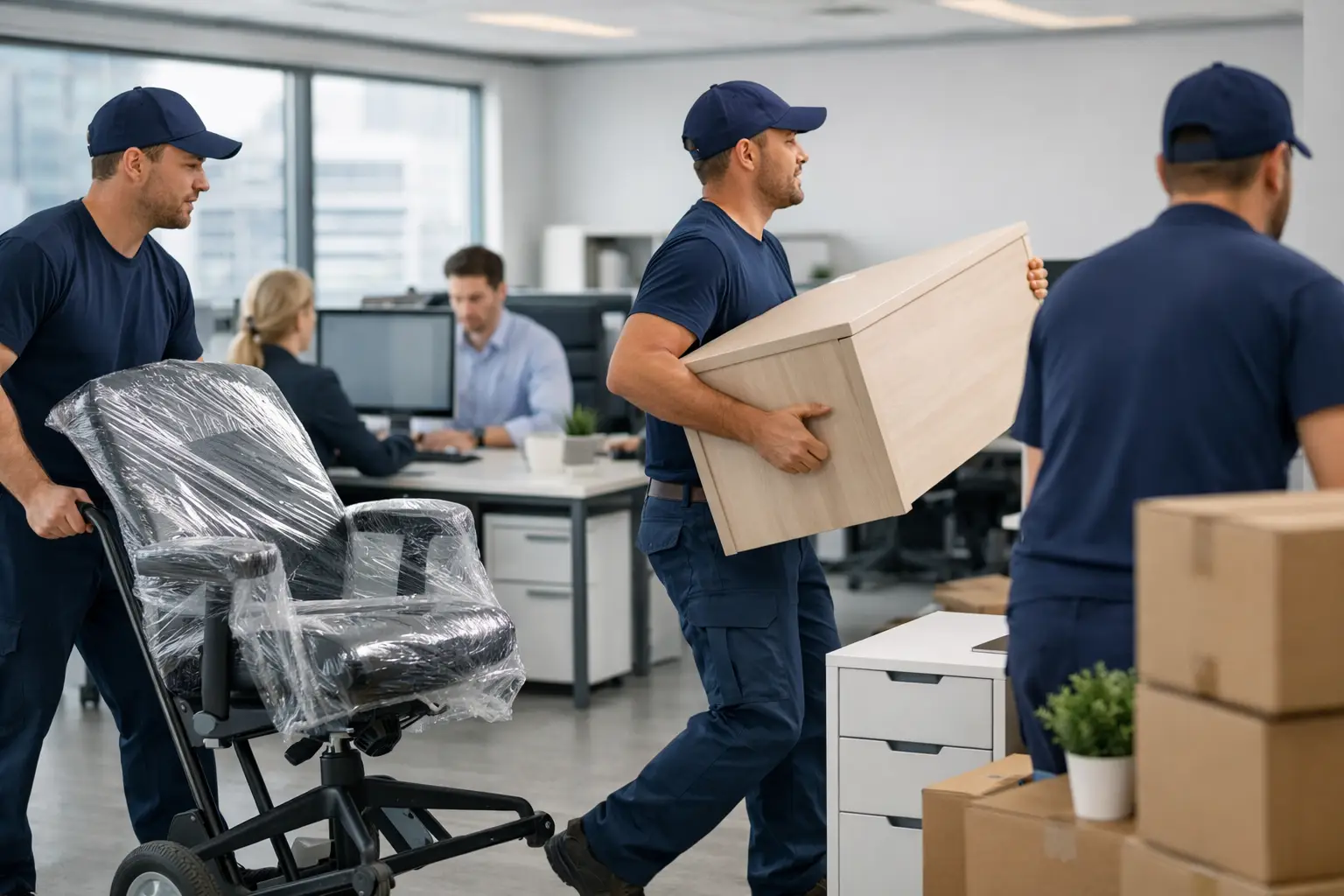
A desk move can look simple until it affects power cords, confidential files, shared workstations, elevator access, and the Monday morning schedule. Knowing how to move office furniture means treating the project as an operational change, not just a day of heavy lifting. The goal is to get the furniture to the new space safely while limiting damage, downtime, and confusion for employees.
Start With a Move Plan, Not a Truck
Before anyone disconnects a monitor or removes a desk drawer, identify what is moving, where it is going, and when each area must be ready. Office moves tend to go wrong when furniture, technology, and building access are planned separately. They need to work as one schedule.
Walk both locations and document the major pieces: desks, conference tables, filing cabinets, shelving, reception furniture, breakroom equipment, and storage units. Measure large items and compare those measurements with doorways, hallways, elevators, loading docks, and stairwells. A conference table that fits in the old suite may not turn a tight corner at the new one.
Also confirm building rules early. Many commercial properties require certificates of insurance, reserved loading docks, elevator reservations, floor protection, or moves outside normal business hours. Missing one approval can leave a crew waiting with a loaded truck and no way to unload it.
Decide What Should Move and What Should Not
An office relocation is a useful time to remove furniture that no longer serves the business. Broken chairs, unused cabinets, obsolete cubicles, and excess storage take time and truck space. Moving them only to decide later that they are not needed creates unnecessary cost.
Separate items into three groups: furniture to relocate, furniture to sell or donate, and furniture to recycle or dispose of. This decision should happen before packing begins. It is much easier to manage a clean inventory than sort unwanted items on moving day.
Create a Floor Plan Employees Can Follow
A destination floor plan is one of the most practical tools for moving office furniture. It tells movers where each item belongs and prevents the new office from becoming a staging area full of unlabeled desks and chairs.
Number workstations, offices, conference rooms, and common areas. Then assign each desk, chair, cabinet, and equipment cart a matching destination label. Use a simple format that is easy to read from several feet away, such as “3B-14” for floor three, section B, workstation 14.
For larger offices, color coding can help distinguish departments. Keep the labeling system consistent across furniture, boxes, and employee instructions. If an employee’s monitor is going to workstation 3B-14, the desk components and personal items should carry the same destination reference.
A floor plan also helps determine whether furniture needs to be disassembled. Some items can move intact, which saves reassembly time. Others, such as modular workstations, oversized tables, and tall shelving, may need to be broken down for safe transport and access. The right choice depends on the furniture, the building route, and the condition of the item.
Prepare Furniture Before Moving Day
Office furniture is heavier and less stable than it often appears. Desks can have loose return sections, filing cabinets can tip, and cubicle panels can be scratched or bent if they are stacked without protection. Preparation reduces these risks.
Empty desks, credenzas, cabinets, and bookcases unless the item is specifically designed to move loaded. Remove personal belongings, paperwork, and fragile desk accessories. Employees should take home or separately pack valuables, medication, sensitive documents, and items they need immediately after the move.
Lock filing cabinets when possible, but do not rely on locks alone to keep drawers closed during transport. Drawers may need to be secured, and heavy cabinets should be handled with proper moving equipment. A loaded lateral file cabinet can become dangerous if drawers shift or open while it is being moved.
Disassemble only what needs to be disassembled. Keep hardware from desks, tables, and workstations in labeled bags, then attach those bags to the corresponding item or place them in a controlled parts box. Loose bolts and brackets are a common reason furniture cannot be reassembled quickly at the new location.
Protect finished surfaces with moving pads, shrink wrap, corner guards, or other appropriate materials. Protection is especially necessary for glass tabletops, wood conference tables, upholstered seating, and reception furniture that will be visible to clients.
Coordinate Technology and Sensitive Assets
Furniture and technology often share the same workspace, but they should not be handled as the same category of move. Computers, servers, printers, phones, and network equipment need their own chain of responsibility.
Have the IT team identify what must be shut down, backed up, disconnected, packed, transported, and reconnected. Photograph cable setups when helpful, especially for conference rooms and shared workstations. Label cables and power supplies clearly so they return to the correct device.
Confidential records deserve similar control. Employee files, financial documents, legal records, and customer information should be packed in sealed, labeled containers with designated staff oversight. Do not leave sensitive files in open boxes or unlocked cabinets near a loading area.
If the business has specialized equipment, such as medical devices, production tools, safes, or large-format printers, confirm handling requirements in advance. These items may need special equipment, manufacturer guidance, or a separate transportation plan.
Plan the Physical Move for Safety
The safest way to move office furniture is to use trained labor, the right equipment, and a clear route. Trying to save time by carrying oversized desks by hand, dragging cabinets across floors, or overloading dollies can lead to injuries and property damage.
A professional commercial moving crew can provide furniture dollies, panel carts, moving pads, straps, and trained handling for large or awkward items. This is particularly valuable when a move involves elevators, stairs, long corridors, or multiple floors. Professional movers can also sequence the loading process so the items needed first at the new office are accessible when unloading begins.
Keep employees out of active loading paths unless they have a defined role. They should not be asked to lift heavy furniture or maneuver large items through tight spaces. Assign an internal move coordinator instead. That person can answer questions, approve placement decisions, and communicate with the moving crew without adding extra people to the work area.
Build in Time for Unloading and Setup
Moving furniture into the new office is only part of the job. Allow time for reassembly, placement, cable management, and basic workspace checks. A desk placed in the right room but facing the wrong direction can delay IT setup and force the crew to move it again.
Prioritize functional areas first. Reception, key employee workstations, internet and phone equipment, conference rooms needed for business, and essential storage should be ready before low-priority décor or surplus furniture. If the office must reopen quickly, consider a phased move that keeps critical teams operating while less urgent areas are completed afterward.
Use a Final Walkthrough to Avoid Loose Ends
Before leaving the old office, inspect every room, closet, storage area, and loading zone. Check for wall-mounted items, desk keys, hardware bags, access cards, and paperwork left in drawers. Document the condition of both spaces as required by the lease or building manager.
At the new location, compare the completed placement against the floor plan. Confirm that furniture is stable, drawers open properly, modular pieces are connected, and no equipment or labeled boxes are missing. Small issues are easier to correct while the moving crew and project coordinator are still on site.
For businesses with a tight timeline, the value of professional support is not just the lifting. It is the control over sequence, protection, access, and placement. STC Movers can help turn a complicated office relocation into a managed work plan, so your team can focus on getting back to business rather than figuring out where the conference table belongs.