


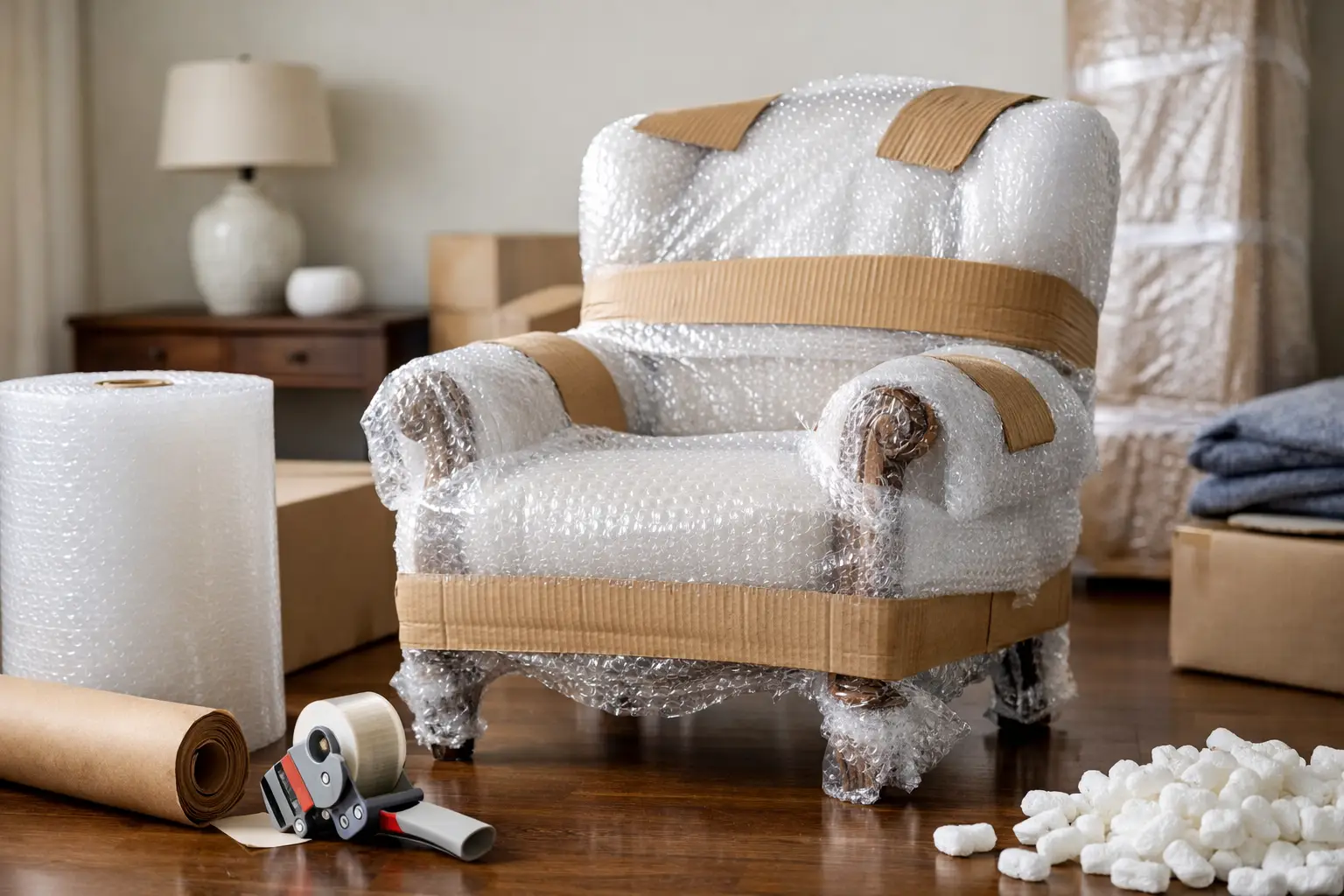
A dining table can look solid enough to survive anything until one loose leg twists in the truck. A glass-front cabinet can be fully wrapped and still crack if it is loaded flat under a heavy box. Fragile furniture is damaged less often by one dramatic mistake than by a series of small ones: poor disassembly, thin padding, loose hardware, and bad truck placement. Knowing how to pack fragile furniture means controlling each of those risks before moving day.
Start With an Honest Condition Check
Before wrapping anything, inspect each piece in good light. Take photos of existing scratches, loose joints, chips, stains, and cracks. This gives you a record of the furniture’s condition and helps you decide where extra protection is needed.
Pay particular attention to weak points. Veneer can lift at corners, old drawer slides can shift, and carved details can snap when they catch on a doorway or another item. If a chair wobbles or a table leg is already loose, have it repaired before the move when possible. Packing can protect furniture from impact, but it cannot make an unstable piece structurally sound.
Clear out drawers, shelves, and cabinets unless the item is specifically designed to be moved with lightweight contents inside. Books, dishes, files, and small equipment add weight that can strain joints and cause drawers to open during transport. For office furniture, remove electronics, cables, and removable accessories before wrapping the main piece.
Gather Materials That Protect Against Movement
The right materials do more than prevent scratches. They create a buffer against pressure, vibration, and contact with other items in the truck. For most fragile furniture, use clean moving blankets or padded furniture pads, stretch wrap, bubble cushioning, corrugated cardboard, packing paper, corner protectors, and strong packing tape.
Avoid placing plastic stretch wrap directly against wood, leather, or upholstered surfaces for long periods, especially in heat or humidity. Plastic can trap moisture and may affect delicate finishes. Instead, place a layer of moving paper, a clean sheet, or a furniture pad against the surface first. Use stretch wrap over the padding to keep it secure.
Bubble cushioning is useful for glass, mirrors, carved edges, marble details, and other vulnerable areas, but it is not a substitute for a moving pad. A few layers of bubble cushioning can resist a small bump. A thick pad distributes force across a larger area when furniture shifts in transit.
How to Pack Fragile Furniture by Taking It Apart
Disassembly is often the difference between a controlled move and a damaged piece. Remove table legs when the design allows it, take glass shelves out of cabinets, separate headboards from bed frames, and detach mirrors from dressers if they can be safely removed. Smaller components are easier to protect and less likely to bend, twist, or catch on a wall.
Put screws, bolts, washers, and brackets into labeled sealable bags. Tape the bag to the underside of the furniture only after placing it inside a padded envelope or wrapping it in paper. Never tape hardware directly onto finished wood, glass, or upholstery. Adhesive can leave residue or pull at a finish.
Label each set of parts clearly. For example, write “coffee table – left leg hardware” rather than simply “table.” This may feel excessive while packing, but it saves time when several pieces are being reassembled at the new location.
Some furniture should not be disassembled. Antique pieces, glued joints, fragile veneer, and items with complicated mechanisms can be safer when handled as a complete unit. If you are uncertain, check the manufacturer’s instructions or arrange for experienced movers to assess the piece. Forcing a component apart can cause more damage than moving it intact.
Protect Glass, Mirrors, and Stone Separately
Glass panels, tabletops, mirrors, and stone inserts require their own packing process. Remove them from the furniture whenever possible. Cover both sides with cardboard, add bubble cushioning around the edges, then wrap the piece with a moving pad or a purpose-made glass carton.
Mark the package “FRAGILE” and “GLASS,” but do not rely on labels alone. The item must be loaded upright, secured so it cannot tip, and kept away from heavy furniture. Never lay a large glass tabletop flat in the truck. Flat placement can concentrate pressure in the center, where a small flex can cause a crack.
For marble, granite, and other heavy stone components, use extra padding at corners and carry them vertically with adequate support. Their weight makes them especially vulnerable to edge damage and difficult to control on stairs.
Wrap in the Right Order
Start at the most exposed points: corners, legs, arms, edges, handles, and decorative trim. Add bubble cushioning or cardboard corner protectors to these areas before covering the full piece with a moving pad. Then pull the padding snugly around the furniture and secure it with stretch wrap or tape applied to the padding, not the furniture surface.
For upholstered items, make sure the fabric is clean and dry before wrapping. Cover the furniture with a breathable layer first, followed by a pad. If rain is possible during loading, a temporary plastic outer layer can protect against moisture, but remove it after delivery rather than leaving it sealed for days.
Wood furniture needs protection from both abrasion and pressure. Use pads that overlap at the corners, where a single thin layer can slide away. Do not stack wrapped furniture without considering what is underneath it. A delicate sideboard may look well protected, but a heavy box placed on its top can damage the frame or bow the surface.
Secure Doors, Drawers, and Moving Parts
Cabinet doors and drawers can open without warning when furniture is tilted. Use stretch wrap around the padded piece to hold them closed. If a drawer is loose or removable, take it out and pack it separately. For doors with glass inserts, add cardboard across the glass face before wrapping the entire unit.
Do not use tape directly on painted, stained, lacquered, or antique surfaces. It can remove finish, leave marks, or pull up veneer. A padded wrap and stretch wrap provide safer control.
Plan the Carry and the Truck Load
Good packing can fail during the final ten feet to the truck. Measure large furniture and identify tight turns, low ceilings, elevators, and stairs before lifting. Remove obstacles from the path, protect door frames if needed, and use a furniture dolly only when the item can be stabilized securely.
Keep furniture upright whenever its construction calls for it. Dressers, cabinets, and bookcases are generally safer upright because their frames are designed to bear weight that way. Tables with removable legs can often travel on their sides once padded. The correct position depends on the piece, so avoid one rule for every item.
Inside the truck, place large, heavy furniture against the walls and distribute weight evenly from front to back. Use moving straps or load bars to prevent shifting. Fragile furniture should not be used as a base for boxes, appliances, or dense office equipment. It needs a protected position where it cannot slide, tip, or absorb the force of another item.
Leave no open space around delicate pieces. Empty gaps allow movement, and movement causes damage. Fill spaces with secured boxes, pads, or other stable items that will not press against fragile surfaces. This is particularly important on longer moves, where road vibration has more time to loosen an otherwise careful load.
When Professional Packing Is the Better Choice
Some furniture is too valuable, too awkward, or too fragile to treat as a standard household item. Antiques, heirloom dining sets, glass display cases, large mirrors, pianos, custom office furniture, and stone-top tables often need specialized materials and a trained crew.
Professional packing is also a practical choice when time is limited. The trade-off is cost, but the value is more than labor. Experienced movers know how to protect access points, use the right carrying equipment, secure a truck load, and recognize when a piece should be crated, disassembled, or moved intact.
If you are packing on your own, do not rush the final wrap because the truck has arrived. Give fragile furniture the time, space, and protection it requires. For customers who want the handling and loading managed from start to finish, STC Movers can help turn a high-risk part of the move into a controlled process.