


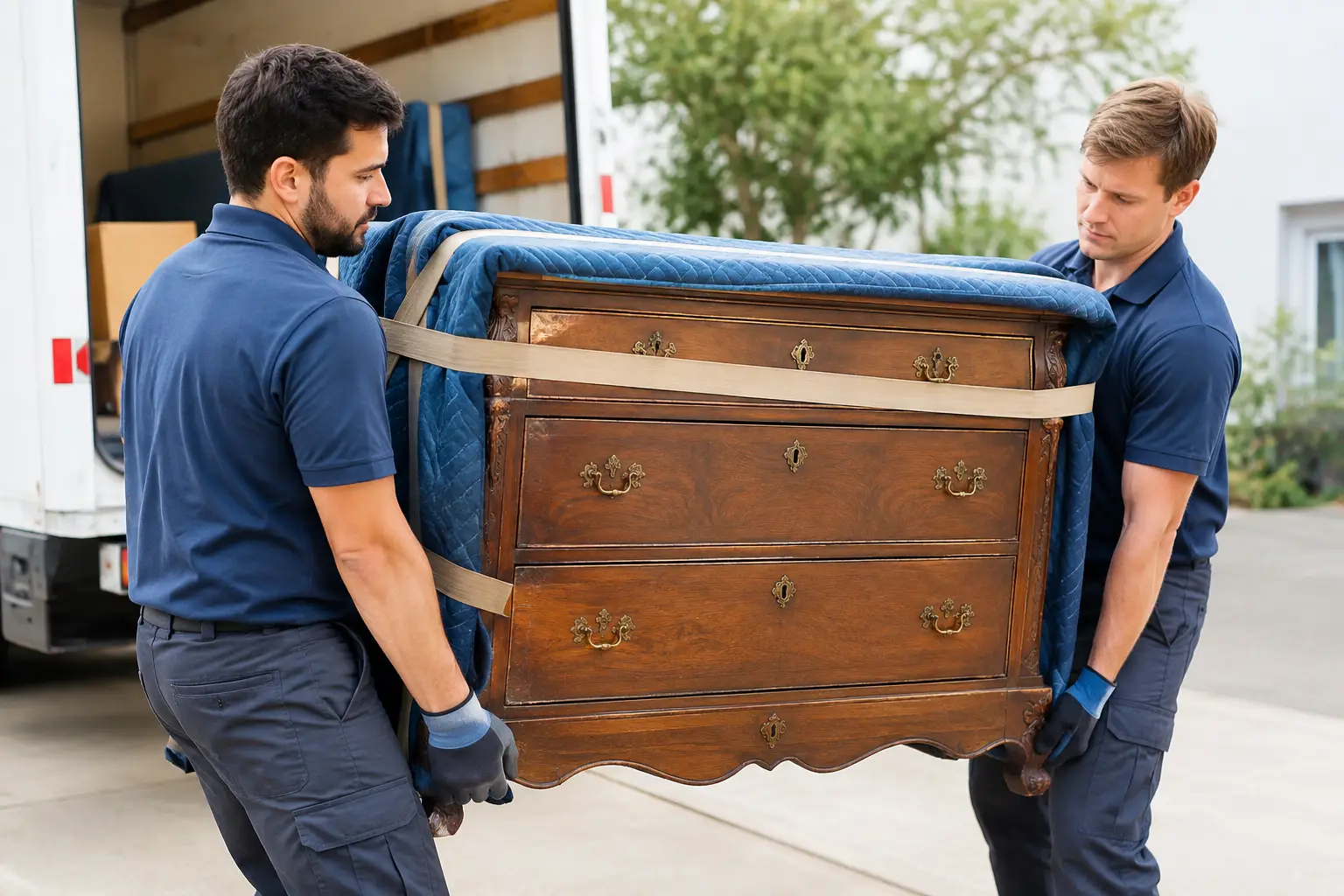
A carved wood dresser, marble-topped table, or hand-built cabinet can be far more vulnerable than it looks. Age, previous repairs, dry joinery, fragile veneers, and original finishes all change how to transport antique furniture safely. The goal is not simply to get the piece from one address to another. It is to prevent pressure, vibration, moisture, and handling mistakes from causing damage that may be difficult or impossible to reverse.
For a move involving valuable or sentimental antiques, careful preparation usually matters more than speed. A professional moving crew can provide the right equipment and labor, but owners should also understand what makes a particular piece sensitive before moving day begins.
Assess the Furniture Before You Move It
Start by identifying the materials and weak points. Antique furniture is not always constructed like modern furniture. A chair may have loose joints hidden beneath an intact finish. A chest may have a fragile back panel. A dining table can have a heavy stone top that places stress on an old wood base.
Take clear photos from all sides before packing. Photograph existing scratches, chips, cracks, loose trim, water marks, and hardware. Th