


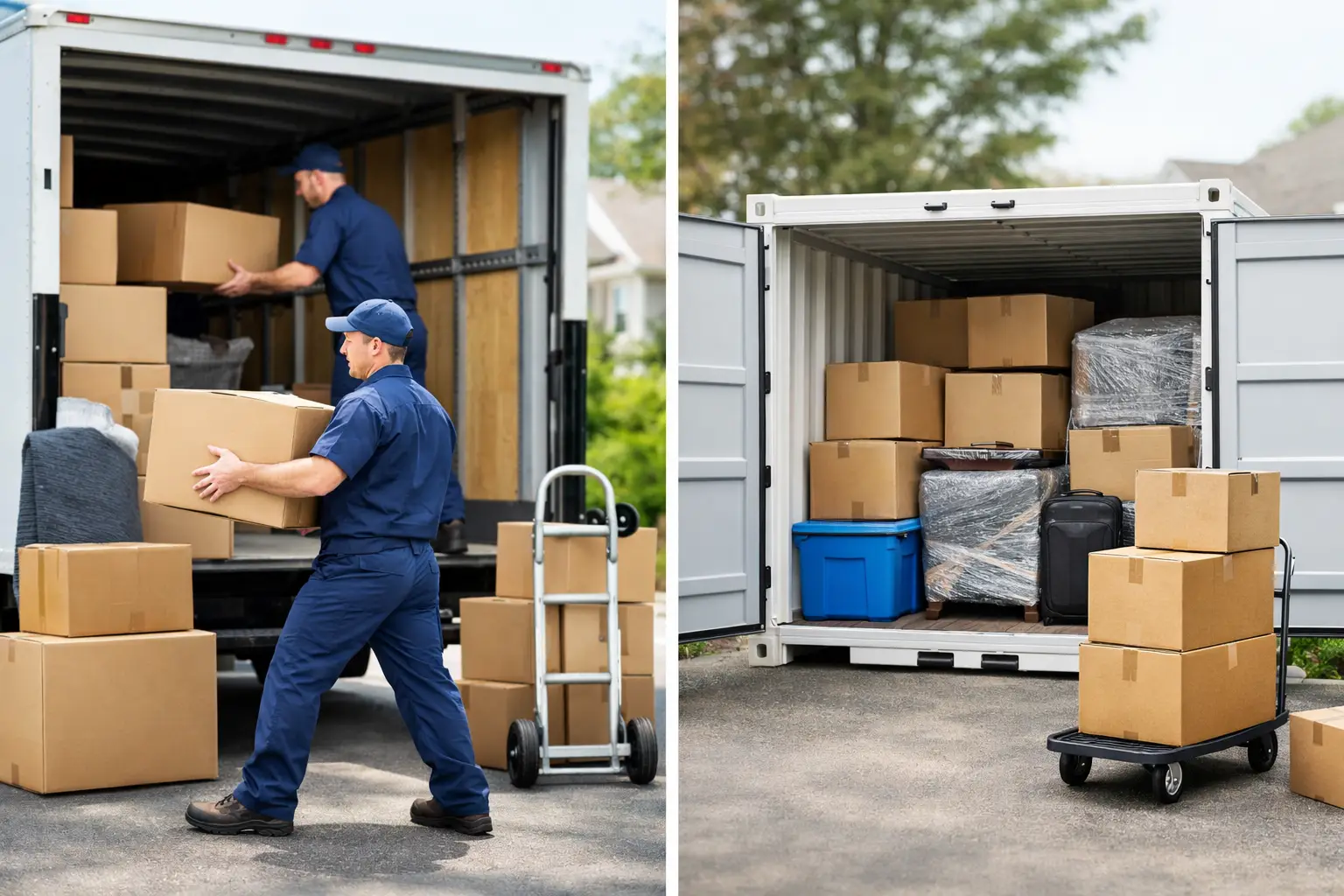
A move can look simple on a quote sheet and become complicated the moment a sofa will not clear the doorway or a closing date changes. When comparing movers versus moving containers, the best choice is not always the lowest advertised price. It is the option that gives you enough control, labor, protection, and scheduling certainty for the move you actually have.
A moving container puts the packing and loading work largely in your hands. A full-service mover provides the truck, trained labor, and coordinated handling from pickup through delivery. Both can be useful, but they solve different problems.
Movers Versus Moving Containers: The Core Difference
With a moving container, a company delivers a portable storage unit to your home. You load it, secure your belongings, and arrange pickup when you are ready. The container is then transported to your destination, where you unload it yourself or hire separate labor. Depending on the provider and location, the container may remain on-site for several days or longer.
With professional movers, a crew loads your belongings into a moving truck, transports them, and unloads them at the new location. You can choose packing services, partial packing, or loading and unloading only, depending on the scope of service. The mover manages the physical work and the transportation plan as one operation.
That distinction matters because transportation is only one part of a move. Packing, lifting, protecting furniture, navigating stairs, parking a truck, and meeting building requirements can take more time and effort than people expect.
When a Moving Container May Make Sense
Moving containers are often a reasonable fit for customers who have a flexible schedule, can handle the labor, and want to load at their own pace. If you are moving from a single-level home with easy access, have help from friends or family, and do not need a fixed delivery date, a container can offer useful flexibility.
Containers can also work well when storage is part of the plan. For example, if your new home will not be ready for several weeks, you may be able to keep the container in storage rather than unloading and reloading your belongings. That can reduce one round of handling.
The trade-off is that flexibility can create more work. Y