


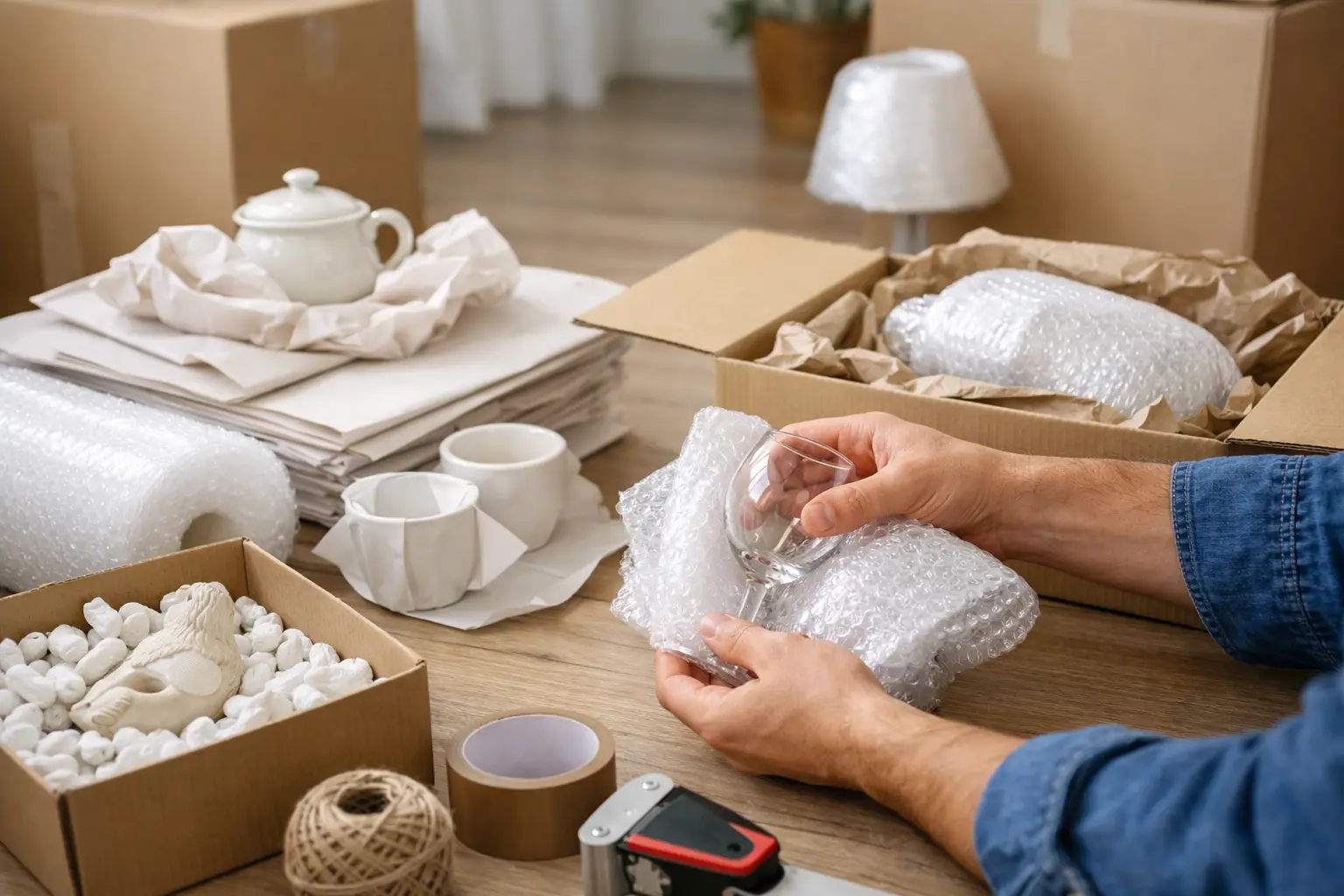
A cracked plate or shattered lamp usually does not happen because the truck hit one bad bump. It happens because the item had room to move inside the box. If you want to know how to pack fragile items for moving, the goal is simple: stop movement, absorb pressure, and label clearly so nothing delicate gets treated like a box of books.
Fragile packing is less about buying expensive materials and more about using the right method for each item. Glassware, dishes, mirrors, electronics, and decor all break in different ways. A good packing plan accounts for that before the first box is taped shut.
How to pack fragile items for moving without damage
Start with the right supplies. Weak boxes, old tape, or loosely packed filler create problems fast. For most fragile household items, you need sturdy small or medium boxes, packing paper, bubble wrap, strong tape, and a marker. Dish pack boxes and dividers help for kitchenware, but they are not mandatory for every move.
Smaller boxes are usually the better choice for breakables. People often reach for large boxes to save time, but heavy fragile items in a big carton put too much pressure on the bottom and are harder to carry safely. A smaller box keeps weight under control and reduces the chance of crushing.
Before packing anything, build a cushion at the bottom of the box with crumpled packing paper or other shock-absorbing material. That bottom layer matters more than most people think. If a box gets set down too hard, the first impact happens there.
Each item should be wrapped on its own. Stacking unwrapped pieces together and adding filler around them is one of the most common mistakes in DIY packing. The wrap should protect the surface, and the box should prevent shifting. You need both.
Packing dishes, glassware, and kitchen items
Kitchen boxes often take the most time because they combine weight, fragility, and awkward shapes. Plates, bowls, mugs, and stemware should not be packed the same way.
Plates are safer packed vertically, like records on a shelf, rather than stacked flat. Flat stacks put direct weight on the bottom plate and make cracking more likely. Wrap each plate in packing paper, add another layer for expensive or thin pieces, and place them tightly side by side in a reinforced box.
Bowls can usually be nested, but not bare. Wrap each one first, then add paper between nested pieces so the rims do not grind against each other in transit. For serving bowls with delicate edges, separate wrapping is the safer option.
Glasses and stemware need extra care around the rim and stem. Stuff the inside lightly with packing paper to support the shape, then wrap each glass completely. Stemware benefits from an extra layer of bubble wrap around the stem and base. Place heavier glasses on the bottom and lighter, more delicate pieces on top, with enough filler to prevent any contact between them.
Mugs are sturdier than wine glasses, but handles are a weak point. Wrap the handle area well and avoid forcing mugs tightly together. If the fit is too snug, pressure on the handles can cause breaks before the move even starts.
For kitchen items, labels help, but packing density matters more. A box marked FRAGILE still gets loaded and unloaded with the rest of the truck. If the contents can shift, the label will not save them.
Mirrors, artwork, and framed items
Flat fragile items break differently. Mirrors and framed art are vulnerable at the corners and across the surface, especially if they flex. The best approach is to protect the face, reinforce the corners, and pack them upright.
Tape a large X across glass surfaces before wrapping. This does not prevent breakage, but it can reduce glass scatter if damage occurs. Then protect corners with cardboard corner guards or folded cardboard pieces. Wrap the entire item with packing paper or moving blankets, and use bubble wrap on the outside if needed.
Mirror boxes or adjustable picture boxes are useful for larger pieces because they create a tighter fit than improvised cartons. If you use a standard box, avoid leaving open space around the frame. Movement inside the box is what turns a minor jolt into a crack.
Never lay mirrors or framed glass flat under other items. Packed upright, they handle pressure better and are less likely to snap from uneven weight. That applies in a moving truck and while boxes are waiting to be loaded.
Lamps, decor, and odd-shaped breakables
Decorative items are where people usually underestimate risk. Vases, ceramic figures, lamp bases, and glass accents often have narrow points, uneven weight, or fragile attachments. They need customized wrapping, not a one-size-fits-all approach.
Remove detachable parts first. Lamp shades, bulbs, finials, shelves, and lids should be packed separately whenever possible. A lamp base may travel safely in one box, while the shade should go in another with very light surrounding pressure. Crushing is a bigger threat to shades than impact.
For vases and hollow decor, fill the interior lightly with packing paper before wrapping the outside. This helps the item keep its shape under pressure. For handles or protruding pieces, add extra wrap to those areas and make sure they are not bearing weight against the side of the box.
If an item has an irregular shape, do not force it into a box that is too small. That creates pressure points. Use a box that allows padding on all sides, then fill empty areas firmly so the item cannot roll or tilt.
Electronics and small valuables
Electronics are fragile in two ways: they can break physically, and they can be damaged by poor packing even when they look fine on the outside. Screens, corners, ports, and internal components all need protection.
Original boxes are ideal when you still have them because they are designed for the item’s size and weight. If not, choose a strong box with at least a few inches of protective material on every side. Wrap screens carefully, avoid direct tape on surfaces, and keep cords, remotes, and accessories in labeled bags.
Small valuables deserve a different decision process. If something is highly breakable and difficult to replace, it may be better to transport it personally rather than load it on the truck. That depends on the item, the distance, and how much control you want over handling. Sentimental value often matters more than market price.
Common mistakes that cause breakage
Most damage comes from a short list of avoidable errors. One is underfilling boxes. Another is overpacking them to the point that contents press against each other. Both create stress that shows up later during loading or transport.
Mixing heavy and delicate items in the same box is another problem. A cast iron pan should not share space with glass bakeware. Books should not sit on top of ceramic serving pieces. Fragile boxes need controlled weight, not just careful wrapping.
Poor labeling also causes trouble. Write FRAGILE on multiple sides and note the top of the box with THIS SIDE UP when orientation matters. That said, labels work best when the box is packed correctly to begin with.
Used boxes can be fine if they are clean and structurally sound, but worn-out cartons are a gamble. If the corners are soft or the bottom has already stretched, do not use them for anything breakable.
When professional packing makes sense
Some moves involve too many fragile items to handle casually. Large homes, full kitchens, antique collections, glass furniture, and office equipment can turn packing into a time-consuming project with very little room for error.
Professional packing makes the most sense when timing is tight, the inventory is complex, or the cost of damage would outweigh the packing expense. It also helps when there are oversized or high-risk items that need more than standard boxes and paper. A trained crew is not just faster. They know how to build boxes correctly, manage load weight, and prepare fragile items for real transport conditions.
If you are packing on your own, start early and work by category. Do not leave the kitchen or wall art for the final night. Fragile packing takes more time than people expect, especially when each item needs to be wrapped and boxed with purpose.
The safest box is the one you can gently shake without hearing or feeling anything move. That is the standard to aim for. If a wrapped item still has room to shift, it is not ready for the truck yet.
Moving always involves some pressure, but fragile items do not have to be a source of guesswork. Pack for impact, not appearance, and your belongings have a much better chance of arriving the way they left.