


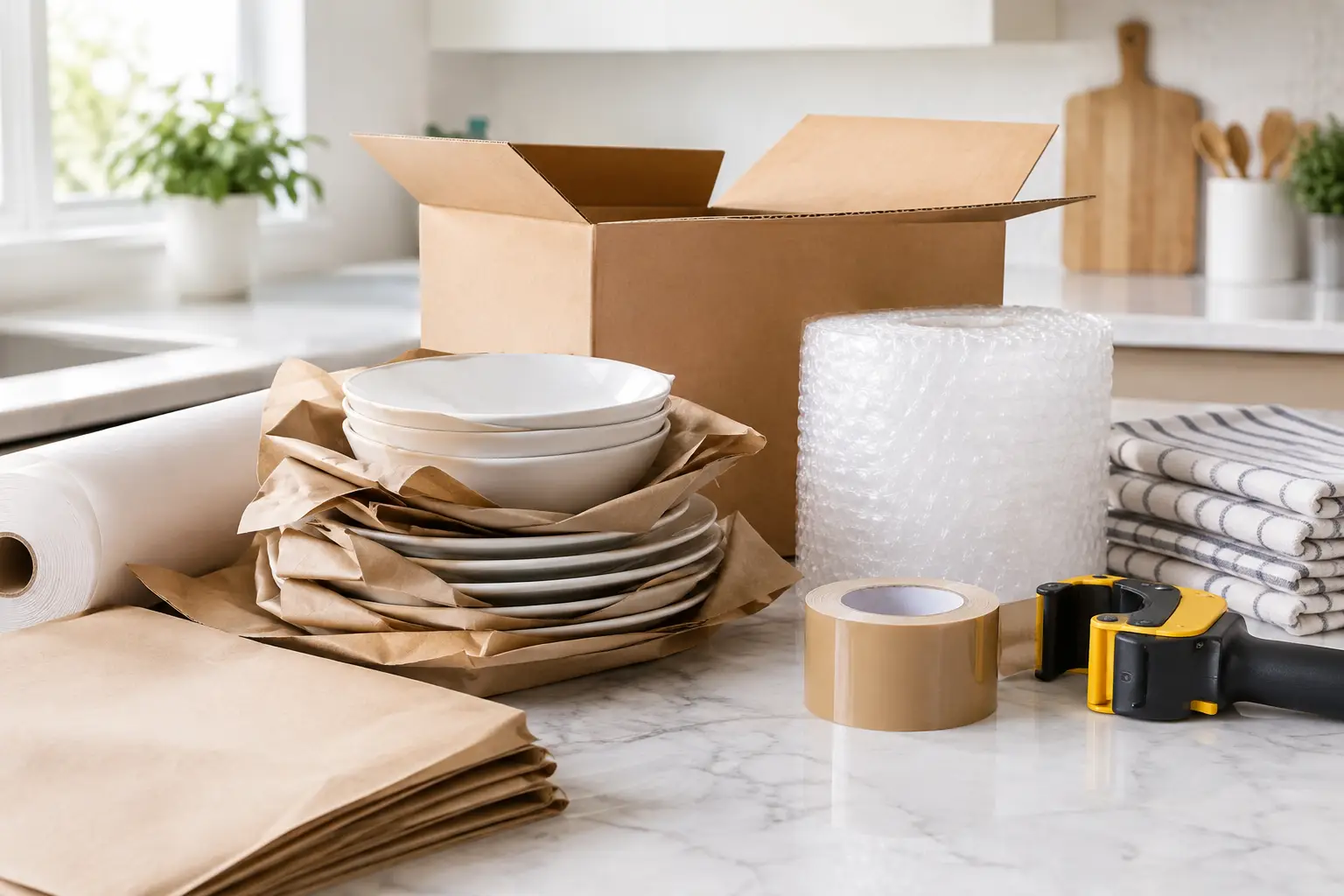
A kitchen can fill more boxes than any other room in the house, and it contains some of the easiest items to damage. Glassware, dishes, small appliances, pantry goods, and sharp utensils all need different handling. The best supplies for kitchen packing are the ones that protect fragile pieces, keep boxes manageable, and make it clear what needs careful handling when the truck is loaded.
Buying a few specialized materials is usually less expensive than replacing a broken set of dishes or arriving at your new home with a box of loose, mixed-up kitchen items. The goal is not to overpack every item. It is to use the right protection where it matters and keep the packing process controlled.
Best supplies for kitchen packing
Start with sturdy boxes made for the job. Used boxes can work for lightweight pantry items, but they are a poor choice for dishes, glassware, and appliances if they are crushed, damp, torn, or weakened at the bottom. Kitchen boxes carry concentrated weight, so box quality matters.
For most households, the core supplies include:
- Small moving boxes for canned goods, dishes, and heavy cookware
- Medium boxes for plasticware, small appliances, and lighter pantry items
- Double-wall dish boxes for plates, bowls, glassware, and serving pieces
- Packing paper, bubble cushioning, and corrugated cardboard inserts
- Heavy-duty packing tape, a tape dispenser, and permanent markers
- Box labels, stretch wrap, and resealable bags for small loose parts
You may not need every item for every move. A household with everyday stoneware and a few wine glasses can often rely on dish boxes, packing paper, and a little bubble cushioning. A kitchen with crystal, collectibles, or expensive small appliances may justify specialty glass dividers and more substantial padding.
Dish boxes and cell dividers
A double-wall dish box is one of the most useful supplies for a kitchen move. These boxes are built to handle dense, breakable contents and are less likely to buckle under the weight of stacked plates. Use them for glassware, mugs, bowls, serving dishes, and cookware with breakable lids.
Cell dividers are especially helpful for stemware, bottles, and drinking glasses. They prevent items from knocking together inside the box. However, dividers do not replace wrapping. Each glass should still be wrapped before it goes into a cell, particularly if it has a thin rim, stem, or handle.
Plates travel best when packed vertically, like records in a crate, rather than laid flat in a tall stack. Wrap each plate in packing paper, place a padded layer at the bottom of the box, and fill gaps so the contents cannot shift. Keep dish boxes at a manageable weight. A packed box should be secure, not so heavy that it is difficult to lift safely.
Packing paper versus bubble cushioning
Unprinted packing paper is the everyday workhorse for kitchen packing. It is clean, flexible, and easy to use around plates, bowls, utensils, and cookware. Crumpled paper also fills empty space inside boxes, which is critical because movement inside a box causes much of the damage during a move.
Bubble cushioning provides stronger impact protection for fragile or unusually shaped items. Use it for crystal, glass lids, delicate serving pieces, and appliance components that cannot be removed. It is not necessary to wrap every dinner plate in multiple layers of bubble cushioning. That adds bulk, increases cost, and can cause boxes to become too heavy.
Avoid packing kitchen items directly in newspaper if possible. Newsprint can transfer ink to dishes, glasses, and light-colored surfaces. It can be used as an outer filler layer when needed, but clean packing paper is the better material for anything that touches your kitchenware.
Tape, labels, and markers
Packing tape is not an area to cut corners. Choose a strong moving or shipping tape and seal the bottom seam of every box with multiple strips. For heavier boxes, use the H-tape method: run one strip down the center seam and one strip across each edge seam. Repeat this pattern on the top after packing.
A tape dispenser speeds up the process and creates a cleaner seal than tearing tape by hand. It also reduces the temptation to use too little tape on a box that will be carrying heavy dishes or canned food.
Use a permanent marker to label each box on at least two sides. Write the room, a general contents description, and handling instructions where appropriate. Labels such as Kitchen – Glassware – Fragile or Kitchen – Open First are more useful than simply writing Kitchen. The people unloading the truck need to know which boxes require extra care before they pick them up.
Supplies that prevent common kitchen packing problems
Some of the most frustrating moving problems come from small items that are easy to overlook. A few simple materials can prevent leaks, lost components, and damaged surfaces.
Resealable bags are useful for appliance cords, screws, blender attachments, food processor blades, and small hardware. Put the parts in a bag, label it, and tape the bag to the appliance or place it in a clearly marked essentials box. Never leave a loose blade or sharp attachment in the bottom of a box.
Stretch wrap helps secure appliance doors, refrigerator shelves, utensil trays, and bundled cookware. Do not apply it directly to a finished wood surface or leave it in place for an extended period, especially in heat. For appliances, remove loose parts when possible and protect polished or glass surfaces with paper or cushioning first.
Cardboard sheets are useful between stacked pans, cutting boards, platters, and framed kitchen decor. They add structure without taking up the space that thicker cushioning materials require. For sharp knives, wrap each blade in packing paper or use a blade guard, then secure the bundle with tape. Clearly mark the package so nobody reaches into the box without care.
Do not pack food and cleaning supplies the same way
Pantry packing needs a different approach from dish packing. Check open containers for leaks and discard expired food before moving day. Pack canned goods and jars in small boxes because their weight adds up quickly. Place glass jars upright, wrap them if needed, and use paper to keep them from touching.
Dry foods, spices, and sealed containers can usually travel in medium boxes. For opened bottles of oil, vinegar, sauces, or liquids, tighten the cap, place each bottle in a resealable bag, and pack it upright. If a liquid is likely to leak, it is often better to use it, give it away, or dispose of it before the move.
Cleaning products deserve special attention. Do not pack chemicals with food, dishes, or cookware. Some movers have restrictions on transporting flammable, corrosive, or hazardous materials, including certain aerosols, solvents, and cleaning solutions. Review what your moving company can transport before packing these items. When in doubt, keep them separate and ask before moving day.
Build one kitchen essentials box
The kitchen is often one of the last rooms packed and one of the first rooms you need after arrival. Set aside one clearly labeled box or bin that stays with you, not buried in the moving truck. Include a few plates, cups, utensils, a can opener, paper towels, basic cookware, dish soap, a sponge, snacks, and any daily-use coffee or tea supplies.
This is also the right place for medication, baby bottles, pet food, and special dietary items that cannot be misplaced. An essentials box does not need to be elaborate. It simply prevents the first night in a new home from becoming a search through sealed cartons.
Match supplies to the level of help you need
If you are packing your own kitchen, buying good materials and allowing enough time are the two biggest controls you have. Start with items you use least, such as serving ware, specialty gadgets, and extra glassware. Leave daily dishes and basic cooking tools until the final days.
For a large kitchen, a short timeline, or valuable fragile items, professional packing can be the more practical option. A trained moving crew knows how to distribute weight, protect breakables, and prepare boxes for loading. STC Movers can help customers who want the kitchen packed as part of a managed move rather than handled as a last-minute task.
Use supplies that fit the items you own, label boxes so they can be handled correctly, and do not overload them just to use fewer cartons. A well-packed kitchen makes the first meal in your new home much easier to manage.