


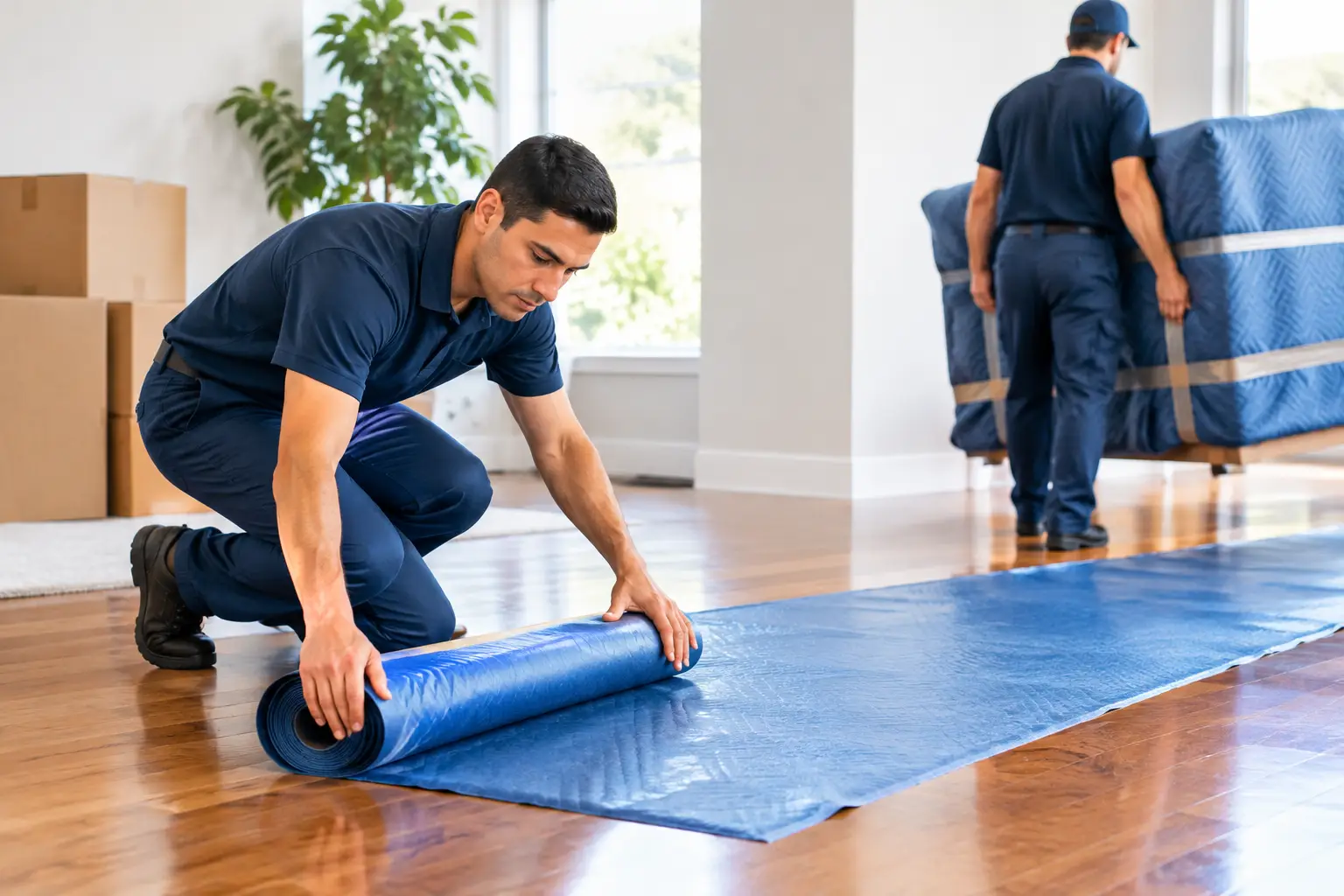
A hardwood floor can be damaged before the first box reaches the truck. Grit caught under a moving dolly, a wet shoe at the entry, or one dragged chair leg can leave marks that are expensive to repair. That is why customers often ask how movers protect hardwood floors before a residential or commercial move begins. The answer is not one product or one precaution. It is a controlled process that starts with a clean path, uses the right floor protection, and keeps heavy items moving safely from room to truck.
How Movers Protect Hardwood Floors on Moving Day
Professional movers protect hardwood floors by planning the travel route first. They identify the doorways, halls, stairs, elevators, and rooms that will carry the most traffic. The goal is to limit movement over exposed flooring and create a protected lane for people, carts, and furniture.
Before protection goes down, the floor should be dry and reasonably clean. Small stones, sand, and loose debris can become abrasive when covered by pads or runners. A crew may sweep the path or ask the customer to do so before arrival, especially after rain or landscaping work.
The protection method depends on the home, the amount of furniture, the weather, and the type of move. A small apartment move with a clear entry path may need runners and careful footwear. A larger household move with several movers, dollies, and repeated trips may require heavier temporary protection across hallways, living areas, and entry points.
Floor Runners for High-Traffic Paths
Reusable floor runners are one of the most common tools for protecting hardwood. These are usually padded, non-slip coverings placed along the path between rooms and the exit. They help shield the finish from shoe traffic, dirt, and minor contact from moving equipment.
Runners work best when they lie flat and extend through the busiest areas. If a runner bunches, slides, or leaves part of a narrow hallway exposed, it creates a new risk. Crews should adjust it as the move progresses rather than treating floor protection as a one-time setup.
Runners are practical for standard foot traffic and hand-carried boxes. They are not a substitute for proper lifting technique. A heavy dresser set down too hard can still dent a floor through a thin covering, particularly on softer wood species.
Hard Surface Panels for Heavy Equipment
When movers need to use dollies, appliance hand trucks, or other rolling equipment, thicker protection may be appropriate. Temporary hard-surface panels, often made from materials such as Masonite or similar board products, distribute weight and create a more durable route over vulnerable flooring.
This approach is especially useful for heavy appliances, safes, large office equipment, and furniture that cannot be carried safely by hand. The trade-off is that rigid panels take more time to install and must be positioned carefully. A panel with an unprotected edge or debris underneath can scratch the floor it is meant to protect.
For many moves, the safest plan is a combination: padded runners where people walk and hard panels where heavy rolling equipment is necessary. The right choice depends on the item weight and the layout, not on a one-size-fits-all rule.
Furniture Handling Matters as Much as Floor Covering
Floor protection reduces risk, but it does not replace careful handling. The most common hardwood floor damage during a move happens when furniture is dragged, tilted incorrectly, or placed down abruptly.
Movers should lift furniture whenever possible instead of sliding it across the floor. For large pieces, a team may use furniture straps, shoulder dollies, or a coordinated two-person or four-person carry. These tools reduce the chance that a sofa leg, bed frame, or cabinet corner will scrape the hardwood while turning through a doorway.
Furniture pads also help. Moving blankets are used primarily to protect the furniture itself, but they can prevent a hard edge from making direct contact with walls, trim, or flooring during a carry. Wrapped items are easier to grip and less likely to snag on door frames.
Using Dollies Without Scratching Floors
Dollies save time and reduce lifting strain, but they need to be used with care on hardwood. Wheels can track in grit, leave marks, or concentrate weight in a small area. A professional crew checks that wheels are clean and uses protected routes rather than rolling directly over bare wood whenever possible.
The load must also be balanced. A wobbly hand truck can tip, and an overloaded dolly may leave pressure marks or cause an item to strike the floor. Large appliances and tall furniture should be secured to the dolly and guided by more than one mover when conditions require it.
At thresholds and transitions, crews should slow down. Hardwood often meets tile, carpet, or exterior surfaces at a doorway, creating a lip where wheels can catch. This is a high-risk point for both the floor and the item being moved.
Weather Changes the Protection Plan
Rain, snow, mud, and even a dusty driveway increase the chance of floor damage. Moisture can dull or stain some finishes, while mud and grit can be ground into the surface by repeated foot traffic. On wet days, movers may use additional runners, entry mats, shoe covers, or a more limited route through the home.
Shoe covers can help in clean, dry areas, but they are not always the best choice for active loading work. Some covers reduce traction, which can create a safety issue when carrying heavy items. Safe footing comes first. A well-protected path, clean work shoes, and frequent checks are generally more effective than relying on shoe covers alone.
Customers can help by clearing snow, leaves, hoses, and loose gravel from exterior walkways before the crew arrives. This makes loading safer and prevents debris from being carried inside.
What Customers Should Do Before Movers Arrive
A moving crew can work more efficiently when the home is prepared for protection. Clear small items, rugs, pet bowls, and décor from the main walking routes. If an area rug will stay in the home, roll it up or secure it so it does not become a tripping hazard under a runner.
Point out any existing scratches, dents, loose boards, recently refinished areas, or floors with a delicate finish during the walkthrough. This gives the crew useful information and helps set expectations before work begins. If there is a particular room you do not want used as a passageway, say so early, while another route can still be planned.
It also helps to reserve parking close to the entrance when possible. A shorter, cleaner path from the truck means fewer trips across the floor and less time spent moving heavy items through the house.
For commercial moves, office managers should identify access rules, elevator requirements, loading dock procedures, and areas with specialty flooring. A building may require certain protective materials or restrict the use of wheeled equipment in common areas. Addressing those details before moving day avoids delays and protects the property.
Questions to Ask a Moving Company About Floor Protection
Before booking, ask how the company protects hardwood, tile, and other hard surfaces during a move. A clear answer should cover the materials used, how routes are planned, and how the crew handles dollies and heavy items. Ask whether floor protection is included in the service or whether certain materials involve an added charge.
You can also ask whether the company conducts a walkthrough before loading begins and how it documents existing conditions. This is not about creating unnecessary paperwork. It is about making sure the crew understands the home and the customer understands the plan.
At STC Movers, careful handling starts with evaluating the work area, not rushing directly to the truck. The best protection is practical: keep paths clean, cover the areas that need coverage, use the right equipment, and move each item with control.
Hardwood floors deserve attention because even a successful move can feel frustrating if it ends with a fresh scratch in the entryway. Before moving day, walk the route your furniture will take and discuss any concerns with the crew. A few minutes of planning can prevent damage that takes far longer to fix.