


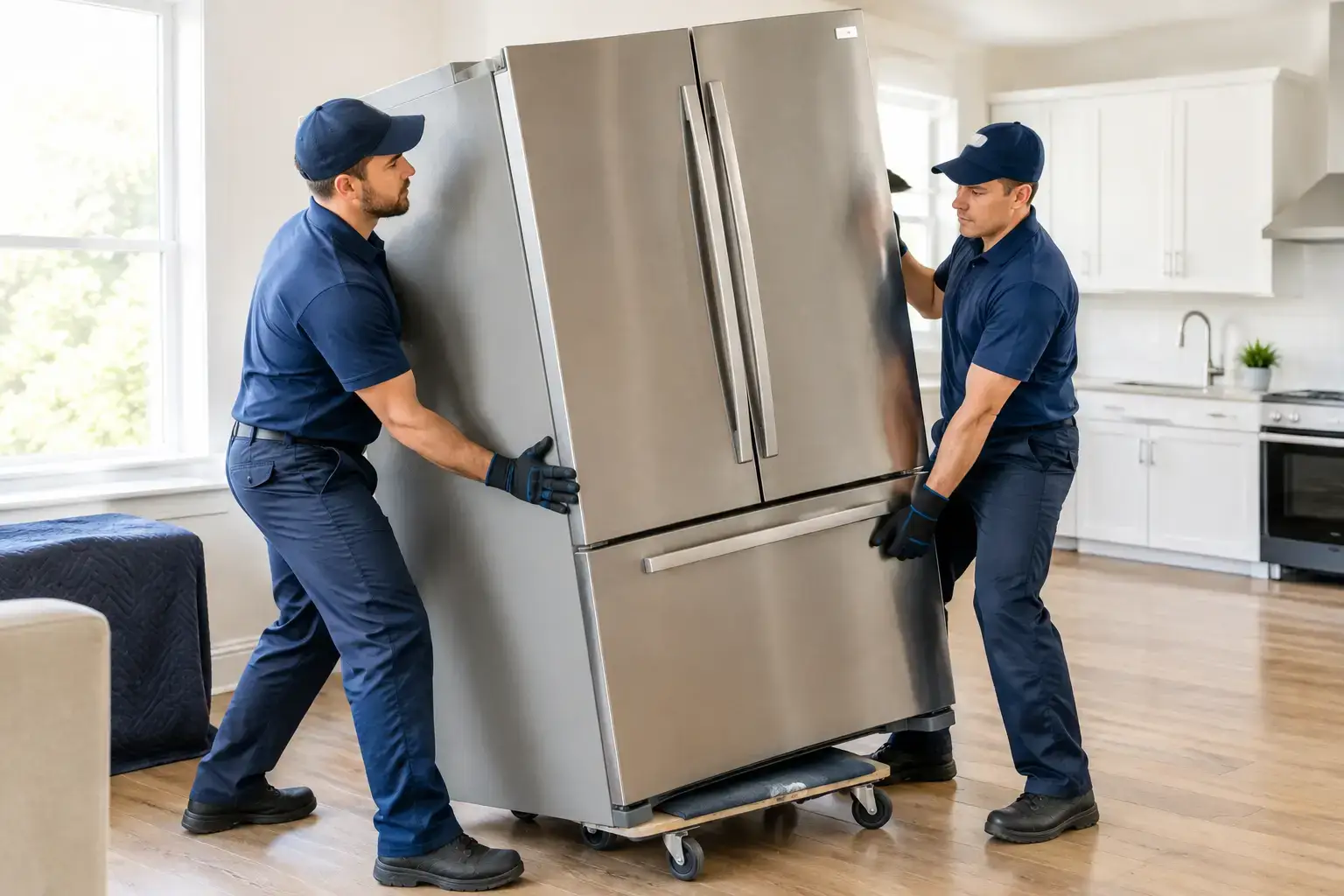
A refrigerator can weigh more than 250 pounds. A front-load washer may be heavier than it looks, with most of its weight concentrated low to the floor. Add narrow hallways, door thresholds, stairs, and a rental move-out deadline, and one wrong decision can damage the appliance, the property, or someone’s back.
Knowing how to move heavy appliances starts with recognizing when the job is manageable and when it needs trained moving labor. Appliances are awkward, costly, and often connected to water, gas, or electrical systems. The goal is not simply to get them out the door. It is to disconnect, protect, load, transport, and reinstall them without creating a safety problem or an expensive repair.
Start With a Realistic Moving Plan
Do not begin by sliding an appliance across the floor to see whether it will fit. Measure the appliance, its depth with doors removed if applicable, and every point on the route: doorways, hallways, stair landings, elevator openings, and the path from the curb to the new location.
Check the appliance manual before disconnecting anything. Manufacturers may specify how long a refrigerator must remain upright, where shipping bolts should be installed on a washing machine, or whether a dryer has special handling requirements. If you no longer have the manual, the model number is usually located inside the door, on the back panel, or along the frame.
The route matters as much as the appliance itself. A flat path with wide doors may be suitable for a prepared do-it-yourself move. A staircase with a turn, wet outdoor steps, or an appliance that must be lifted over a railing changes the risk level substantially. In those situations, professional movers are often the safer and more economical choice than replacing a damaged appliance or paying for an injury.
Disconnect Appliances Safely Before Moving
Moving day is not the time to rush through disconnecting utilities. Complete this work in advance so the appliance can dry, cool, and be secured before loading begins.
Refrigerators and Freezers
Remove all food, shelves that can shift, and loose ice trays. Unplug the unit at least 24 hours before the move so it can defrost completely. Place towels around the base and leave the doors open while it dries to reduce water leakage and odors.
If the refrigerator has an ice maker or water dispenser, turn off the water supply and disconnect the line carefully. Cap or secure the line as needed. Tape the power cord and water line to the back of the unit, but do not tape directly onto a finished surface where adhesive could leave residue.
Refrigerators should travel upright whenever possible. Laying one on its side can allow compressor oil and refrigerant to move into places where they do not belong. If it must be tilted or briefly placed on its side, follow the manufacturer’s instructions and allow adequate standing time before plugging it in at the new home.
Washers and Dryers
Turn off hot and cold water valves, then disconnect washer hoses. Drain any remaining water from the hoses and pump system into a shallow pan or bucket. Even a small amount of trapped water can leak during transport.
Front-load and many top-load washers require shipping bolts to stabilize the drum. These bolts are usually included with the appliance when new. Without them, the internal suspension can be damaged while the washer is being moved. If the original bolts are unavailable, check with the manufacturer before transport rather than assuming the washer is ready to load.
Unplug an electric dryer and disconnect its vent hose. Gas dryers require additional caution. Shut off the gas supply and have the line disconnected and capped by a qualified professional when required by local code. Do not treat a gas connection as a standard moving task.
Dishwashers, Ranges, and Other Built-In Units
Dishwashers and built-in appliances may be secured to cabinetry and connected to plumbing or electrical wiring. Gas ranges require safe disconnection and leak prevention. These jobs can involve building codes, shutoff valves, and specialized connections, so professional appliance service may be necessary before movers can transport the unit.
Use the Right Equipment, Not Just Extra Hands
More people do not automatically make an appliance move safer. Untrained helpers can lose footing, lift unevenly, or get trapped in a narrow space. The right equipment creates control.
A heavy-duty appliance dolly with a ratchet strap is the basic tool for many upright appliances. Unlike a standard hand truck, an appliance dolly is designed to hold taller, heavier loads securely against its frame. Furniture pads protect finished surfaces, while moving straps can help with controlled lifting when there is enough room to use them correctly.
You may also need floor runners, cardboard, or hardboard to protect hardwood, tile, and carpet. Door jamb protectors are useful in tight spaces. A loading ramp rated for the appliance’s weight is essential when loading into a truck. Never try to walk a refrigerator or washer up a loose board or an improvised ramp.
Before lifting, remove detachable doors, pedestals, racks, or handles only if the manufacturer allows it and doing so improves clearance. Keep hardware in labeled bags. Reducing an appliance’s profile by a few inches can be the difference between a controlled move and damaged trim.
How to Move Heavy Appliances With a Dolly
The appliance should be empty, disconnected, dry, and protected before it is placed on the dolly. Wrap it in moving blankets, then secure the blankets with stretch wrap or tape placed over the padding rather than directly on the finish.
Position the dolly against the side or back recommended for transport. With one person stabilizing the appliance, tilt it only far enough to slide the dolly’s toe plate underneath. Center the load and fasten the dolly strap tightly around the appliance. Test the strap before moving. If the appliance shifts at this stage, it will shift more on a threshold, ramp, or turn.
Keep the appliance close to the dolly and move slowly. The person handling the dolly should carry most of the load, while a second person guides from the side and watches for walls, corners, and uneven flooring. Nobody should stand directly below an appliance on stairs or downhill from it on a ramp.
For a single low threshold, use controlled momentum and clear communication. For stairs, do not guess. The appliance weight, stair width, handrail placement, landing size, and crew experience all matter. A stair carry may require a specialized stair-climbing dolly or a professional crew with the right technique and insurance coverage.
Protect the Home and the Appliance in Transit
Loading is only half the job. Appliances can be damaged when they shift inside the truck, especially during braking and turns. Place heavy appliances against the front wall of the cargo area when the loading plan allows, keeping the weight balanced across the truck.
Secure each appliance with load-rated straps attached to proper tie-down points. Do not rely on a single rope or a stack of boxes to hold it in place. Use moving pads between appliances and other furniture so metal corners, doors, and control panels do not rub together.
Keep refrigerators upright. Washers and dryers should also remain upright unless the manufacturer specifically permits another position. Do not stack heavy boxes on top of appliances, and do not use an appliance as a support surface for unsecured items.
At the destination, inspect walls, flooring, and the appliance before unwrapping it. Move it into position carefully, reconnect utilities as appropriate, and check that it sits level. A washer that is not level can vibrate heavily and walk across the floor during use.
Common Mistakes That Create Damage
The most common mistake is underestimating weight and awkwardness. An appliance can be too heavy for two people even when each person is strong enough to lift part of its weight. Balance, grip, route conditions, and fatigue are what turn a manageable load into a dangerous one.
Another avoidable problem is moving a washer without shipping bolts or a refrigerator before it has fully defrosted. Homeowners also sometimes leave doors swinging freely, forget to secure hoses and cords, or drag an appliance across a finished floor. These shortcuts save minutes and can create damage that costs far more.
Timing matters, too. Do not schedule appliance disconnection for the same hour the truck arrives. Give yourself time to defrost, drain, clean, measure, and pack the tools needed for a controlled move.
When Professional Movers Are the Better Choice
Professional help is particularly useful for stairs, tight turns, oversized appliances, commercial equipment, and moves involving gas connections or built-in units. A capable moving team brings equipment, coordinated labor, protective materials, and experience handling heavy items through spaces that were not designed for them.
For households that are already managing packing, lease deadlines, children, pets, or a long-distance move, delegating appliance handling can also protect the rest of the schedule. STC Movers can help coordinate the labor and transport side of a move so heavy appliances are handled as part of an organized loading plan.
If a route feels uncertain, stop before the first lift. Taking ten minutes to remeasure a doorway, clear a landing, or arrange qualified help is a practical decision that protects both your property and the people doing the work.