


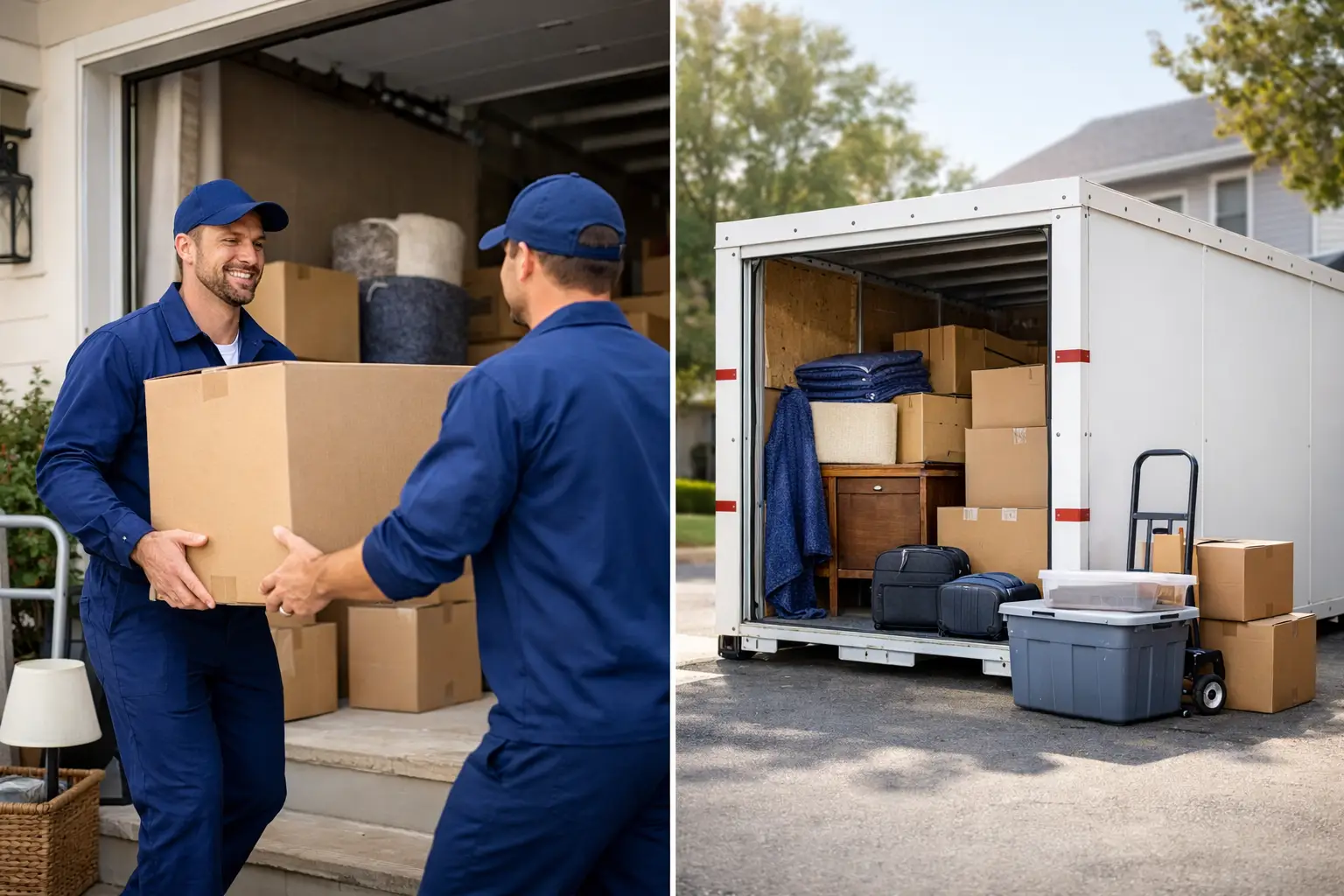
A move can look simple on paper until the sofa will not clear the doorway, the lease ends Friday, and half the kitchen is still packed in loose bags. The choice between full service movers versus pods affects more than the final bill. It determines who does the lifting, how long your belongings sit in transit, and how much of the schedule you control.
A portable moving container can be a practical option for some moves. A full-service moving crew can be the better choice when time, labor, property access, or the condition of your belongings matters more than doing part of the work yourself. The right answer depends on the details of your move, not just the advertised starting price.
Full Service Movers Versus Pods: The Core Difference
With full-service movers, a professional crew handles the physical work based on the services you select. That may include packing, disassembly, loading, transportation, unloading, and reassembly. You work within a scheduled pickup and delivery plan, and the mover is responsible for moving your shipment from one location to the next.
With a portable container service, a container is delivered to your home or business. You load it yourself, or hire separate labor to do it. Once loading is complete, the provider transports the container to your destination or stores it until you are ready for delivery. This model gives you more time and more direct control over loading, but it also places more of the physical and organizational work on you.
Neither option is automatically better. A one-bedroom apartment move with flexible timing is different from a family home move involving stairs, large furniture, children, and a hard closing date. An office relocation has its own concerns, including equipment handling, downtime, building rules, and coordination with staff.
Compare the Total Cost, Not the Starting Quote
Portable containers are often viewed as the lower-cost choice because you are handling the packing and loading. That can be true, particularly if you have reliable help, a manageable amount of furniture, and several days to complete the work. But the container price is only one part of the budget.
Before deciding, account for packing materials, furniture pads, dollies, labor help, storage fees, delivery charges, and any fees related to the distance between the container and your entrance. If you cannot do the loading yourself, hiring hourly labor may narrow the price difference quickly. You may also need to take time off work to pack, load, wait for delivery, and unload.
A full-service estimate may appear higher because it includes trained labor, a truck, moving equipment, and transportation coordination. It can also be easier to budget when the scope is clearly documented. Ask what is included, what may result in additional charges, and whether services such as packing, stairs, long carries, bulky items, or storage are addressed in writing.
The least expensive option is not always the lowest-cost move. If an unplanned extra day of rental labor, a damaged dresser, or missed work affects your budget, those costs count too.
Consider Who Will Do the Physical Work
Loading a container is harder than many people expect. The heaviest items need to be placed first, weight must be distributed correctly, and furniture needs protection from shifting during transport. A poorly loaded container can leave empty pockets that allow items to move, or create pressure that damages boxes and furniture.
Full-service crews do this work regularly. They know how to protect corners, wrap furniture, secure loads, and move heavy pieces through tight spaces. That experience is especially valuable for sectionals, large dressers, appliances, safes, antiques, fragile items, and furniture that needs disassembly.
The labor question is also about safety. Carrying boxes down stairs or moving a heavy bed frame through a narrow hall creates a real risk of injury and property damage. If friends or family are helping, think realistically about their availability and ability. A move that takes a professional crew several hours can take a small group of inexperienced helpers an entire weekend.
For commercial moves, the labor difference is even more significant. Desks, filing systems, conference tables, shelving, electronics, and inventory require a coordinated plan. A professional moving team can reduce the burden on employees who need to keep the business operating.
Timing and Access Can Decide the Move
Portable containers offer flexibility when you need time to load at your own pace. This can work well during a renovation, a long transition between homes, or a move where storage is necessary. You are not limited to completing all packing and loading in one scheduled day.
That flexibility has limits. Your property needs a suitable place for the container. Driveways, parking areas, HOA restrictions, city permits, apartment management rules, and narrow streets can all affect whether delivery is possible. Some properties simply do not have enough safe, legal space for a container.
Full-service movers are often more practical in dense neighborhoods, apartment buildings, and locations with difficult access. A crew can bring the equipment needed for a long carry, work within a building’s loading dock reservation, and load directly onto the moving truck. You still need to confirm parking and building requirements, but you do not need to keep a large container on-site for days.
Schedule pressure also matters. If you must be out by a specific date, a crew working to a defined plan can provide more control over the actual move day. With a container, delivery and pickup windows may be broader, and unloading still depends on your availability and labor plan.
Storage Is Useful, but Access Matters
A container can be a sensible choice when your belongings need to go into storage between homes. The same container may be picked up and stored, then delivered when your new location is ready. This can reduce the need to unload into one facility and reload later.
However, consider whether you will need anything while your belongings are stored. Access to a stored container may be limited, require advance notice, or involve additional charges. If important documents, seasonal items, business files, or basic household goods are packed inside, retrieving them may not be simple.
Full-service moving companies can also coordinate storage, depending on the service arrangement. This option may be a better fit when you need professional packing, inventory control, or help managing a more complex household or office move. Ask how items are stored, how they are inventoried, and what access is available if your plans change.
Protection and Accountability Are Different
Both options require careful planning for damage protection. With a container, the quality of packing and loading is largely in your hands unless you hire professionals. Take the time to use proper boxes, protect furniture, fill open space, and secure the load. Avoid placing heavy items on boxes marked fragile, and do not assume a blanket alone will protect finished wood or glass.
With full-service movers, the crew’s handling procedures and the coverage options offered by the company become central questions. Ask how furniture is protected, what happens if an item is damaged, and what valuation or protection choices are available. You should also document the condition of valuable items before the move, regardless of which method you choose.
Professional handling does not mean nothing can ever go wrong. It means there is a defined process, experienced labor, and a clear point of contact when questions arise. That can be worth a great deal when you are moving belongings that are expensive, fragile, or difficult to replace.
When a Container Is Usually a Good Fit
A portable container often makes sense for a smaller move, a local or regional relocation with flexible dates, or a situation where you have capable help and a secure place to load. It can also be useful when temporary storage is the main issue and you are comfortable taking responsibility for packing and labor.
It may be less suitable when parking is restricted, the property has difficult access, the move includes many heavy or fragile items, or your schedule leaves little room for delays. It is also worth reconsidering if you are already planning to pay for packing and loading help. At that point, compare the full scope and cost of a professional move.
When Full-Service Movers Are Usually the Better Fit
Full-service moving is often the stronger option for households with substantial furniture, tight move-out deadlines, multiple flights of stairs, or long carrying distances. It is also practical for families who need to focus on utilities, school changes, closing paperwork, and the many other tasks that come with relocating.
For offices and small businesses, professional movers can help limit disruption by planning the order of loading, protecting equipment, and working around building requirements. The goal is not just to get assets from point A to point B. It is to keep the move controlled enough that normal operations can resume quickly.
STC Movers works with customers who need a structured plan for the labor, transportation, and handling involved in a residential or commercial relocation. A clear conversation about inventory, access, timing, and special items is the best starting point for determining the level of service you need.
Your move does not need the most hands-on option or the most expensive option. It needs an option that matches your available time, the physical demands of the job, and the consequences if the schedule slips. Make that decision before moving day, when every box suddenly feels heavier.